




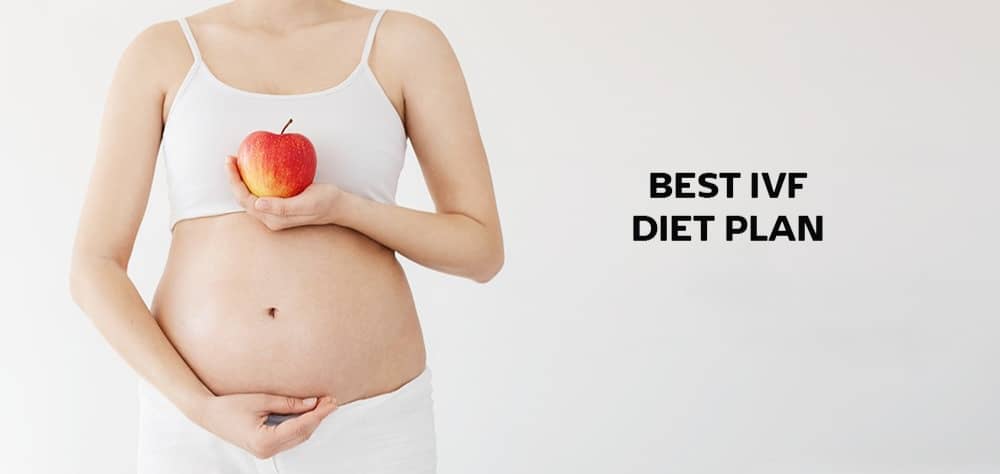
Many patients desire to follow the most nutritious IVF diet plan possible to increase their chances of becoming pregnant. Food has a big influence on how our bodies function and may have an impact on the likelihood of getting pregnant following an embryo transfer. Studies have demonstrated that the best diet for IVF is the Mediterranean diet. According to one study, patients who adhered to the diet produced more embryos.
It would be ideal if you changed your IVF diet as soon as you decide that IVF is the course of treatment you want to take. Reducing your consumption of sugar and processed foods, such as sweets. chips, fast food, and soda, is crucial prior to an embryo transfer. Highly processed, high-sugar diets were linked to a decreased risk of getting pregnant, according to a 2018 study.
You may be asking what the ideal IVF diet plan is to guarantee your success during the IVF treatment as hopeful people or couples. In order to help you make the greatest dietary decisions, we examine what to eat when trying to conceive in this article.
Why is it important to follow a diet during IVF?
IVF in Iran, like in other countries, has certain requirements. One of the most important points in increasing the chances of IVF success is following a proper diet during this period. Alongside choosing the best IVF clinic in the world in 2025, a key factor to getting the best result is taking the best IVF diet plan.
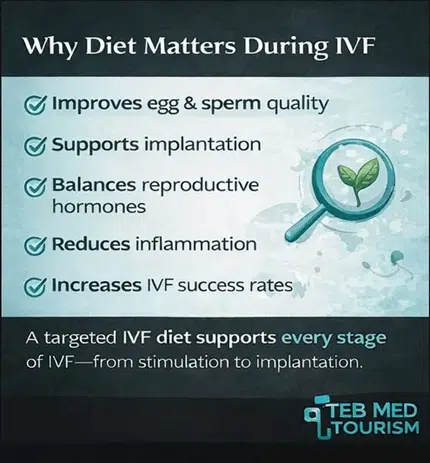
The foundation of a successful IVF cycle and a healthy pregnancy involves sticking to the IVF diet exactly as prescribed during your IVF process. With a high success rate, you could avoid typical IVF problems and make a difficult journey simple and enjoyable.
The IVF diet has a perfect effect on improving the chances of successful IVF, according to statistics and real proof, which can help with several IVF issues. avoiding emotional and mindless eating in a truly helpful manner.
The treatment team, which includes embryologists, fertility specialists, and the agency staff, will fight to provide good outcomes, healthy pregnancies, and live births if patients stop worrying about their bodies.
Ovarian stimulation (IVF stimulation), egg harvesting, and embryo transfer are the three key components of the complex treatment known as IVF, which is related to the intended mother.
For each part, it is better for the intended mother to obey special diet orders that include dos and don’ts during IVF stimulation in the dietary field, dos and don’ts before egg retrieval in the dietary field, and dietary dos and don’ts before embryo transfer and the IVF diet plan after embryo transfer. Following all the above step-by-step will change the final result to a happy ending.
What should I eat during IVF?
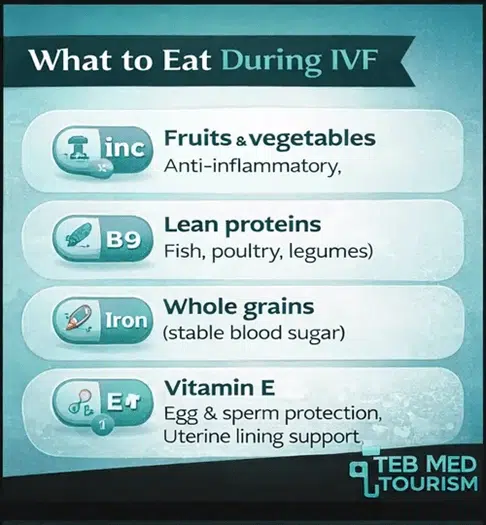
To support your body’s needs and foods to eat during IVF treatment, concentrate on eating a healthy, anti-inflammatory diet full of nutritious foods. Lean meats, healthy fats, whole grains, and an abundance of fruits and vegetables are all included in this.
Staying hydrated is also essential, as are meals that encourage a healthy uterine lining, such as pineapple, and foods that aid in estrogen balance, such as cauliflower and broccoli.
In the following, we’ll consider the vitamins, minerals, and nutrients that increase IVF chances.
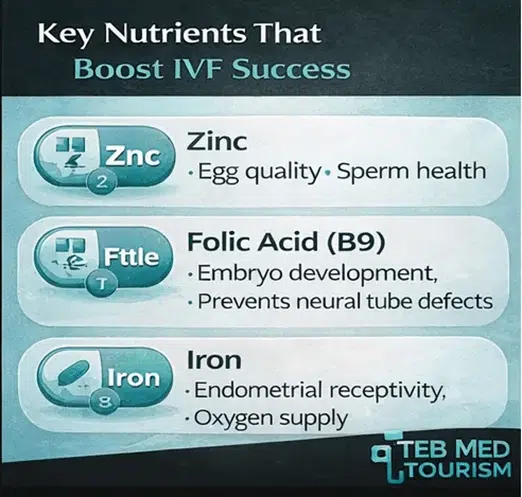
Zinc
Zinc is an important element that directly affects female reproduction, egg quality, cell division, and the construction of the baby’s DNA and cells. For pregnant women, 11 mg, and for women before IVF to increase egg quality, about 8 mg daily, typically will be prescribed. Consuming the following foods in addition to your fertility doctor’s prescription could be very helpful.

Folic acid
Supplementary folic acid is often recommended for women before pregnancy. Besides promoting fertility, folic acid supplementation can help protect against neural tube irregularities in a developing fetus. The good news is a direct relation between higher IVF success rates and higher folic acid supplementations.
A high IVF success rate is equal to experiencing success in your first IVF cycle via your IVF journey with your eggs or the IVF egg donation procedure with donated eggs.
Iron
An appropriate level of iron is necessary to have good endometrial receptivity. According to experimental studies, intravenous iron supplementation has increased the success rate of IVF following iron deficiency repair.
Vitamin E
Vitamin E may have an effect on both male and female fertility, which could benefit IVF patients. Studies suggest that it might enhance the quality of the growing embryo and boost conception rates by improving the health of sperm and eggs. Additionally, it is thought to promote a healthy uterine lining, which is essential for the implantation of embryos.
How Vitamin E Could Benefit Women During IVF?
Egg quality gradually deteriorates with age, making conception more challenging. But don’t give up! By preventing oxidative stress, vitamin E may be able to slow down this process.
In fact, several studies indicate that vitamin E intake may enhance the quality of eggs and embryos, even in cases of assisted reproduction such as IVF. The antioxidant action of vitamin E may be most beneficial to women with conditions like PCOS (Polycystic Ovary Syndrome), which are associated with increased levels of oxidative stress that can negatively impact fertility.
By keeping your eggs safe and healthy, vitamin E raises the chance that they will develop into healthy embryos. Both natural conception and assisted reproductive techniques like IVF require this.
B Vitamins (B6, B12, Folic Acid)
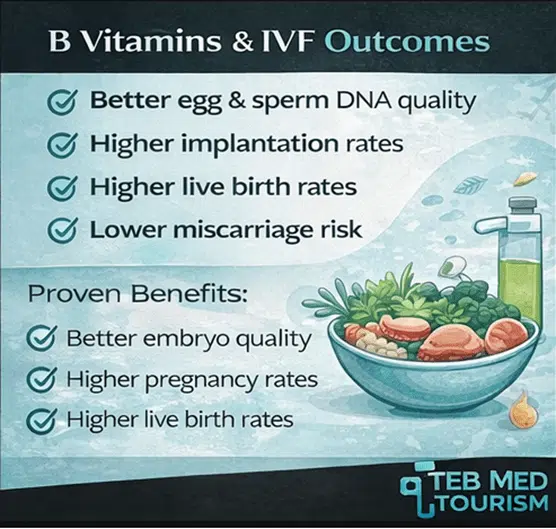
The several B vitamins (1, 2, 3, 6, and 12) are thought to be linked to a decreased incidence of infertility. Additionally, some research has linked low vitamin B-12 levels to female infertility, whereas higher levels may improve fertility in women receiving therapy for infertility.
Although further research is required, there is apparently a fragile connection between B vitamins and sperm quality.
Vitamin B-9
You have undoubtedly heard about vitamin B-9 (folate) if you have been studying vitamins for fertility and getting pregnant. Both male and female fertility depend on vitamin B-9.
Because lower levels are linked to a greater risk of neural tube birth abnormalities, including spina bifida, it is crucial for fetal development in women. While low levels can also result in irregular ovulation, enough intake can raise progesterone levels.
It has been hypothesized that supplementation may also boost conception rates and enhance the effectiveness of reproductive therapies.
Poor sperm health in men is associated with reduced amounts of folate in semen. Supplementing with more folate may help to improve the outcomes of semen analyses.
How B Vitamins Influence IVF Success
Because there are so many vitamins and minerals that might affect fertility, sometimes taking a high-quality multivitamin is more convenient than taking a large batch of different vitamin tablets.
One study found that a higher chance of a live delivery was associated with higher levels of vitamin B12 and folate, particularly in women undergoing several IVF embryo transfers.
Nevertheless, further research is still needed to fully understand the connection between vitamins and fertility. Age and genetics are just two of the many uncontrollable factors that affect fertility, yet it can feel nice to regain control when you can. Increasing vitamin intake is helpful for getting pregnant and staying healthy throughout pregnancy, but it is not a proven way to treat infertility.
Selenium
The antioxidant qualities of the trace mineral selenium, as well as its effects on egg quality and fertilization rates, may have an impact on female fertility and IVF outcomes.
Further research is needed to fully understand the effects of selenium supplementation, particularly with regard to pregnancy rates and the optimal amounts of supplementation, even though some evidence suggests that it may be beneficial in some aspects of IVF, such as glycemic control in PCOS-affected women.
Coenzyme Q10
Coenzyme Q10 (CoQ10), a naturally occurring antioxidant, may be useful during IVF operations, particularly for women with diminished ovarian reserve (DOR). Although some research suggests that CoQ10 can improve egg quality, fertilization rates, and embryo quality in IVF cycles, particularly for older women or those with DOR, there is conflicting evidence about its efficacy in increasing IVF success rates.
Possible Advantages of Coenzyme Q10:
- Better Egg Quality
- Higher Fertilization Rates
- Higher Clinical Pregnancy Rates
- Decreased Cycle Cancellation
- Ovarian Response Boosted
Vitamin C
Because of its antioxidant qualities and support for reproductive health, vitamin C may enhance IVF outcomes. Higher conception rates could result from its ability to enhance the quality of eggs and embryos. More research is needed, however current findings indicate that vitamin C may be a helpful addition to an IVF support regimen.
L-Carnitine
According to the NIH (National Library of Medicine), L-carnitine supplementation seems to enhance embryo quality by increasing mitochondrial function, particularly in circumstances of age-related fertility decline. On Days 3 and 5 after insemination, oral L-carnitine use greatly improved the quality of embryos; however, it had no discernible effect on the quantity of retrieved oocytes or their rates of maturation and fertilization.
This implies that L-carnitine increases the potential for growth after fertilization, most likely via lowering cellular toxicity and encouraging fatty acid metabolism. These results suggest that L-carnitine may improve embryo growth and implantation success in IVF patients, but more study is required to validate its complete in vivo effects.
High-Quality Protein
For both men and women undergoing IVF therapy, a well-balanced diet that includes high-quality protein is essential. Protein is essential for hormone production, egg quality, and embryo development—all of which are critical for the success of IVF.
Protein’s advantages for IVF quality of eggs and development of embryos:
- Healthy eggs and embryos depend on protein: For women with PCOS, blood sugar levels can be positively impacted by a diet high in protein.
- Hormone production and regulation: The synthesis of hormones that support embryo implantation and control the menstrual cycle depends on protein.
- Healthy sperm: Healthy sperm development is aided by amino acids, which are the building blocks of protein and enable cellular growth and repair.
- General health: Both men and women undergoing IVF therapy need protein for general health and well-being.
Complex Carbohydrates
Complex carbs, which can be a good complement to an IVF diet, are generally good for fertility and can be found in foods like whole grains and legumes and foods that are good for uterus. Because of their gradual digestion, they aid in regulating insulin and blood sugar levels, which may enhance ovulation and have a beneficial effect on hormone balance.
The results concerning the quality of carbohydrates in women undergoing in-vitro fertilization (IVF) were even more remarkable. Compared to women with the whole grain intake during the year preceding IVF treatment, those who consumed the most had a nearly 20% higher chance of implantation (positive beta-hCG) and live birth.
Monounsaturated Fats
Fat molecules with a single unsaturated carbon link are known as monounsaturated fats. Monounsaturated fat-containing oils are normally liquid at room temperature but begin to solidify when cooled. One kind of oil that has monounsaturated fats is olive oil.
Monounsaturated Fats and IVF:
Eating more monounsaturated fats increases the likelihood of a live birth following in vitro fertilization, according to studies. According to one study, the likelihood of a live delivery following embryo transfer was 3.45 times higher for women who consumed the most monounsaturated fat than for those who consumed the least.
Saturated fats have been associated with fewer mature eggs (metaphase II oocytes), while monounsaturated fats don’t appear to have the same negative impact.
Nuts (almonds, macadamia, etc.), seeds, avocados, and olive oil are all great sources of monounsaturated fats.
Diets high in monounsaturated fat, like the Mediterranean diet, have been linked to improved reproductive outcomes, including an increased likelihood of getting pregnant after IVF.
Resveratrol
According to the comprehensive study, resveratrol can enhance both the quantity and quality of egg cells, providing hope for novel, less intrusive reproductive treatments. A natural substance present in the skin of blueberries, raspberries, and grapes may enhance female fertility, according to recent studies.
Red wine and plants both contain resveratrol, a naturally occurring polyphenolic molecule with a host of health benefits. Numerous in vitro and in vivo investigations have shown that this substance possesses a number of anti-inflammatory and anti-tumor qualities.
Lycopene
Consumption of lycopene could influence fertility patients’ ovarian reserve. If verified, the apparent inverse relationship with retinol might be the result of biological processes distinct from oxidative stress.
Supplementing with 4–8 mg of lycopene daily for three to twelve months has been shown to increase sperm parameters and pregnancy rates in human trials. More extensive research is still required to determine the dosage and effectiveness of lycopene as a treatment for male infertility.
Essential Fatty Acids
Omega-3 is more than a dietary supplement. It is a structural component of hormones, inflammatory processes, and cell membranes.
These fatty acids are essential for your uterus, ovaries, and even creating eggs.
The three primary Omega-3s are:
- Eicosapentaenoic Acid, or EPA
- Docosahexaenoic Acid, or DHA
- ALA (found in foods made of plants)
EPA lowers inflammation. DHA promotes the development and proliferation of cells. EPA and DHA are weakly converted from ALA.
All three are essential for women, particularly DHA and EPA.
What To Eat Before Embryo Transfer?
Before an embryo transfer, a balanced diet rich in fruits, vegetables, lean meats, and healthy fats is typically recommended. Eating foods high in iron, folate, and omega-3 fatty acids promotes both overall health and a healthy uterine. Limiting or avoiding processed foods, too much sugar, caffeine, and alcohol is also a smart choice.
What To Eat After Embryo Transfer?
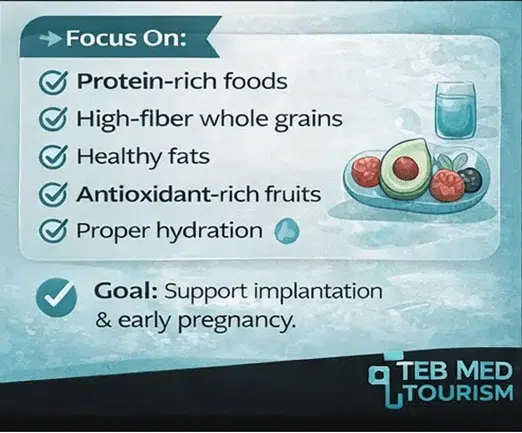
Following an embryo transfer, focus on eating a balanced diet rich in protein, fiber, folic acid, and omega-3 fatty acids to promote implantation and overall health. Foods like nuts, salmon, beans, yogurt, eggs, and leafy greens are good choices. Drinking plenty of water and consuming wholesome grains will also help you.
Lean protein can be found in foods like eggs, chicken, fish (particularly salmon for omega-3s), beans, nuts, and seeds. Avocados, berries, citrus fruits, and leafy greens like spinach and broccoli are good for you.
Barley, brown rice, quinoa, and oats are excellent sources of fiber. Nuts, seeds, and avocados are excellent sources of healthy fats. Fortified cereals, lentils, and dark leafy greens are excellent sources of folic acid.
Antioxidant supplements for men
According to a study published by MDPI, Menevit, a multivitamin that contains antioxidants like vitamin C, vitamin E, zinc, and selenium, has been demonstrated to increase sperm parameters and perhaps improve ART outcomes.
Selenium, zinc, folic acid, lycopene, coenzyme Q10, carnitines, vitamins E and C, and N-acetyl cysteine were all advantageous components. However, some investigations did not find that one or more characteristics had changed significantly. In summary, AS appears to improve male fertility.
Antioxidant supplements for women
Antioxidants have been demonstrated to strengthen the body’s defenses against free radicals, preserve DNA integrity, and enhance and safeguard the quality of eggs and sperm. Folliculogenesis is the process by which eggs mature several months prior to ovulation.
Antioxidants such as glutathione, the master antioxidant, protect eggs from oxidative stress damage throughout this process. In women undergoing IVF, glutathione also aids in the production of stronger embryos and healthier eggs.
The likelihood of a successful implantation is also increased for eggs of higher quality with better DNA integrity. By improving the quality of your eggs with food and supplements, you can boost, protect, and preserve your fertility.
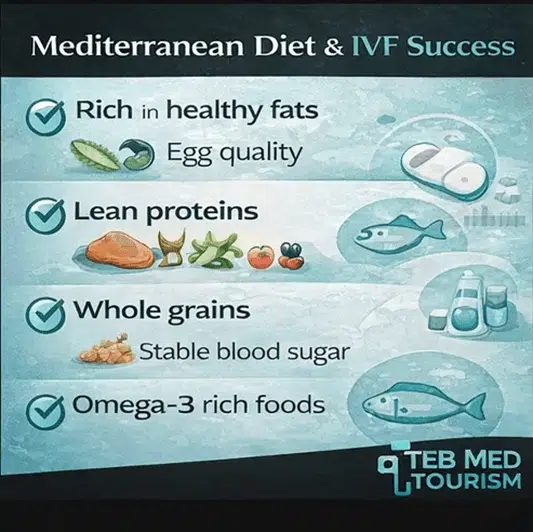
Mediterranean diet and IVF—does it help?
Following a Mediterranean IVF diet plan may improve your chances of getting pregnant using in vitro fertilization. Although further research is needed to validate this connection, vitamin D and omega-3 fatty acids play a significant influence.
As of right now, there are no precise recommendations for what makes up a Mediterranean diet or the ideal amounts of particular items. A nutrition evaluation by a clinical dietitian or naturopath who can examine their eating patterns and create a meal plan may be beneficial for IVF patients.
In the case of vitamin D, supplementation in conjunction with ART treatment may be advised in the majority of instances due to the existing prevalence of deficiency in sub-fertile women and men and the difficulty obtaining enough from food alone.
What is the Mediterranean Diet?
Fruits, vegetables, seafood, whole grains, nuts, and seeds are prominent in the Mediterranean diet. Red meat, dairy, alcohol, and processed meals like cakes and mayonnaise are all restricted.
A 2010 Dutch study found that a preconception Mediterranean-style diet enhances the likelihood of getting pregnant by 40% for couples receiving ART.
How does IVF benefit from a Mediterranean diet?
Research indicates that food may have a beneficial effect on egg quality, which in turn may result in the production of more and higher-quality embryos. Studies show that women who follow the Mediterranean diet more closely prior to IVF are more likely to become pregnant and give birth to a live child.
According to some research, male partners undergoing IVF may have higher-quality sperm thanks to a Mediterranean diet. The anti-inflammatory qualities of the diet might also contribute to the development of a more conducive environment for pregnancy and implantation.
What fruits and vegetables help fertility?
Men’s and women’s fertility can be enhanced by eating fruits and vegetables high in omega-3 fatty acids, folate, and antioxidants. Leafy greens, avocados, berries, citrus fruits, and certain veggies like broccoli and asparagus are especially good. Citrus fruits and other foods strong in vitamin C can also raise hormone levels and enhance the quality of sperm.
Fruits and Vegetables for Fertility:
Leafy Greens are rich in folate and iron, which are necessary for normal ovulation and the production of red blood cells, spinach, kale, and Swiss chard are great foods.
Citrus Fruits are packed with vitamin C, oranges, grapefruits, and lemons can increase hormone levels and fertility while also enhancing the quality of sperm.
Berries have antioxidants and phytonutrients that reduce inflammation help shield reproductive cells from harm. These include blueberries, raspberries, and strawberries.
Avocados are rich in folate, vitamin E, and good fats, avocados are excellent for reproductive health.
Asparagus are rich in several vitamins and minerals that promote fertility, including folate, asparagus is a wonderful food choice.
Broccoli hold other nutrients that might boost fertility, broccoli is also a great source of folate.
Lentils are rich in iron, folate, and other nutrients that may promote fertility, lentils are a great food choice.Tomatoes are rich in lycopene, an antioxidant that improves sperm quality. Bell Peppers have vitamin C and other elements that can help with fertility, bell peppers are a great food choice.
What should I avoid eating during IVF?
Generally speaking, during IVF treatment, one should avoid foods and chemicals that can affect the quality of eggs and sperm, embryo implantation, or overall causes of IVF failure.
Meals heavy in mercury, sugar, and saturated and trans fats are among them, as are processed meals, alcohol, and caffeine; unpasteurized dairy products and raw or undercooked meat, seafood, and eggs should also be avoided due to the potential for harmful microorganisms.
In the following, there’s a more detailed breakdown of the substances and IVF foods to avoid:
Unpasteurized dairy should be avoided since they may also contain dangerous microorganisms. High-mercury fish (tuna, mackerel, swordfish) hold high concentrations of mercury in fish, such as swordfish and tuna, might impair embryonic development and perhaps reduce fertility.
Processed foods and fast food include processed sugars, bad fats, and additives that can harm general health and fertility. Fried and high-fat foods can be found in whole milk, butter, red meat, and a variety of processed meals, can lower the quality of eggs and raise the risk of heart disease.
Refined sugars and artificial sweeteners can cause blood sugar problems, weight gain, and even interfere with IVF.Overconsumption of caffeinated drinks (coffee, tea, energy drinks), particularly from energy drinks and coffee, might disrupt IVF treatment and possibly impact implantation.
Drinking alcohol raises the risk of miscarriage and stillbirth and has a detrimental effect on hormone levels, egg and sperm quality, and more.
Raw or undercooked eggs and foods(such as Salmonella) have dangerous bacteria that can cause food poisoning and can be found in raw eggs, pork, and seafood.
You can increase your chances of a successful IVF cycle timeline by avoiding certain foods and substances and concentrating on eating a nutritious, balanced diet.
Conclusion
By follow a suitable and nutritious IVF diet plan, IVF patients can increase their chances of becoming pregnant because foods have a big influence on how your body function and may have an impact on the likelihood of getting pregnant following an embryo transfer.
Studies have demonstrated that the best diet for IVF is the Mediterranean diet. According to one study, patients who adhered to the diet produced more embryos.