





The egg donor cost can vary based on many variables. Sometimes multiple rounds of Donor Egg IVF are needed which can increase the expenses. Fresh donated eggs usually cost about twice the price of frozen donated eggs.
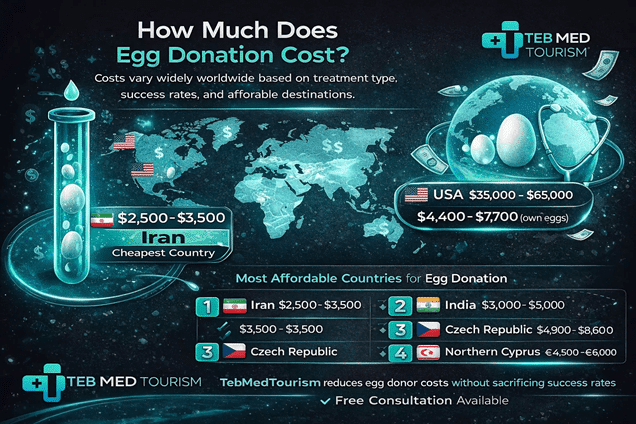
It can be said that the egg donation cost for fresh donated eggs in the USA is approximately between $35,000 and $65,000. This amount includes the cost of agency and fertility clinic fees, egg donor’s compensation, medical expenses, egg retrieval procedure and IVF procedure, legal fees, and travel expenses.
In this article, we are going to talk about the egg donation cost in different parts of the world and guide you to the cheapest country for egg donation.
What is egg donation?
The method of egg donation involves a female patient (egg donor) giving eggs to another female patient (receiver) so that the recipient can get pregnant. Medication must be administered to the donor in order for them to grow numerous eggs during a single cycle in order to donate eggs.
Many patients also ask “is egg donation painful?” and while mild discomfort may occur due to hormone injections and retrieval, the procedure is generally well tolerated and performed under sedation.
A small surgical operation is performed to extract the eggs from the donor under ultrasound monitoring. This is accomplished by inserting a needle into the ovary through the vaginal tissues using an ultrasound probe. A large portion of the entire egg donation process is explained by this phase and hormone stimulation.
The eggs are carefully removed from the ovaries following retrieval. The eggs are evaluated in a laboratory after being extracted. Eggs can then be saved for later use or fertilized. Patients should be made aware of the potential negative effects of egg donation, such as bloating, mood swings, or transient discomfort, just like with any medical procedure.
Sperm from the male partner or a sperm bank is injected into or placed around each egg to facilitate fertilization, which is the process of one sperm entering one egg. This process is known as in vitro fertilization (IVF).
Sperm from the male partner or a sperm bank is injected into or placed around each egg to facilitate fertilization, which is the process of one sperm entering one egg. This process is known as in vitro fertilization (IVF).
This stage may be of interest to couples considering IVF egg donation overseas, such as in Iran, where the process is both legally and medically advanced. After fertilization, the egg develops into an embryo that can be returned to the uterus or stored for future use.
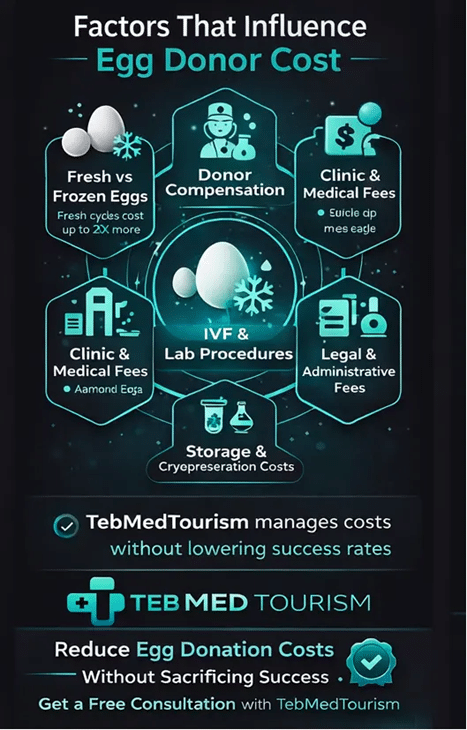
What factors affect the cost of using donated eggs?
Overall pricing is influenced by several factors:
- Fresh vs. frozen cycles
- Donor compensation
- Agency and matching fees
- Medical Costs
- Administrative and legal fees
- Fees for storage
Many Islamic legal and theological frameworks allow egg donation, which significantly affects treatment costs and accessibility of donated eggs.
TebMedTourism reduces egg donor costs and complexity without sacrificing success rates since it manages a significant piece of this procedure. It may be easier to plan ahead and feel more in control if you are aware of the whole cost of egg donation. Get free consultation to get aware of the costs and procedure.
Where are the cheapest countries for egg donation?
In order to help patients understand where high-quality therapy may be provided at a cheaper cost while still taking safety, legality, and medical standards into mind, this section covers some of the most economical countries for egg donation. The cost of egg donation by countries will be examined in the following:
Egg donation cost in Iran
An IVF cycle in Iran typically costs between $2,500 and $3,500, which includes consultations, lab work, medical tests, prescription medications, ultrasounds, and surgical procedures.
The final cost of an egg donor may vary depending on the doctor, clinic, and specific procedures (such as using donor eggs or sperm). This increases the appeal of egg donation in Iran for couples seeking high success rates at a lower cost.
In contrast, IVF costs about $15,000 in the US, excluding medication. Iran’s relatively affordable IVF treatments and cutting-edge medical facilities make it a popular destination for medical tourism and fertility treatments.
Iran’s modern clinics and favorable legislation have made IVF in Iran a popular choice for medical tourists.
Egg donation cost in Spain
Egg donation Spain costs in average are of an IVF-ICSI cycle using your own eggs is between $4,400 to $7,700, which includes clinic visits and basic IVF laboratory services. In Spain, IVF with donor eggs typically costs between $6,500 and $9,700.
In Spain, the average cost of an IVF-ICSI cycle using your own eggs is between $4,400 to $7,700, which includes clinic visits and basic IVF laboratory services. In Spain, IVF with donor eggs typically costs between $6,500 and $9,700.
Egg donation cost in Czech Republic
Considering egg donation abroad cost, in the Czech Republic, the cost of a single IVF cycle using your own eggs typically ranges from about $2,900 to $6,200. IVF treatment with donor eggs at Czech clinics generally costs between approximately $4,900 and $8,600, depending on the clinic and treatment specifics.
Egg donation cost in India
In comparison to European and American countries, the egg donor cost is substantially less expensive in India. The donor cost, prescription medications, required testing, surgery, and egg transfer are just a few of the expenses associated with this treatment approach.
In India, egg donations often cost between $3,000 and $5,000 (three thousand to five thousand dollars). This amount is higher than in Iran, where the cost of the treatment procedure using this technology is often lower.
Egg donation cost in Georgia
Egg donation is considered an affordable option for Georgian couples and those in need of donor eggs for IVF treatment. According to the report, IVF with egg donation typically costs between $5,000 and $7,000 in Georgia, depending on the clinic and specific services provided.
Because it usually covers both the IVF operation and donor-related costs, including screening and medical care, the cost of egg donation is significantly lower than that of many Western countries.
Georgia’s reproductive institutions maintain excellent medical standards, skilled specialists, and state-of-the-art equipment, making it a popular location for people seeking high-quality egg donation treatments at an affordable price.
Egg donation cost in Northern Cyprus
For infertility patients, North Cyprus is one of the affordable destinations where they may save a lot of money, particularly if they want to spend more on accommodation and travel during their treatment.
In North Cyprus, an IVF cycle using your own eggs will cost you between €2,700 and €5,700, while the typical cost of egg donation therapy is between €4,500 and €6,000.
Egg donation cost in UK
In the UK, paying for egg donations is prohibited. In order to pay their expenses, egg donors may be compensated up to £985 every donation “cycle” (a donation cycle is one full round of treatment, after which the eggs are retrieved and donated).
However, if your costs for items like travel, lodging, and childcare exceed this amount, you may be able to make a larger claim. Please discuss the procedure with your clinic.
If you are an egg donor who does not live in the UK permanently, you may get the same compensation as a UK donor; however, you will not be eligible to make a claim for travel expenses incurred abroad.
Egg donation cost in Ukraine
In Ukraine, an egg donation cost cycle is usually between €4,600 and €5,500. Ukraine is therefore a relatively economical option. However, bear in mind that a variety of factors, such as the quantity of donor oocytes being used, if the therapy is assured, and additional procedures, will affect the ultimate cost of treatment. The cost is also influenced by the Ukrainian egg donor clinic and the location of the therapy.
However, it’s also important to consider the potential that some Ukrainian egg donor banks provide an “external service.” To fertilize the donor oocytes, the patient’s partner’s sperm is sent here.
Additionally, the embryos are returned after being vitrified. Additionally, this alternative is more costly because of the high expense of exporting embryos, but patients may save time because they don’t have to fly.
| Cheapest Countries for Egg Donation – Cost Comparison Table | |||
| Country | Egg Donation / IVF Cost Range | What’s Included | Key Advantages |
| Iran | $2,500 – $3,500 | Consultations, lab work, medical tests, medications, ultrasounds, egg retrieval, IVF procedure | Lowest cost worldwide, high success rates, modern clinics, favorable legislation |
| Spain | $6,500 – $9,700 (donor eggs)$4,400 – $7,700 (own eggs) | Clinic visits, IVF-ICSI procedures, basic lab services | Strong legal framework, good donor availability, advanced fertility centers |
| Czech Republic | $4,900 – $8,600 (donor eggs)$2,900 – $6,200 (own eggs) | IVF procedures, donor screening, lab and medical services | Strict EU medical standards, experienced fertility specialists |
| India | $3,000 – $5,000 | Donor compensation, medications, testing, surgery, egg transfer | Large donor pool, significantly cheaper than Europe & USA |
| Georgia | $5,000 – $7,000 | IVF treatment, donor screening, medical care | Skilled specialists, modern clinics, affordable pricing |
| Northern Cyprus | €4,500 – €6,000 (donor eggs)€2,700 – €5,700 (own eggs) | IVF cycle, donor-related services, medical procedures | Flexible regulations, popular medical tourism destination |
| United Kingdom | Donor payment prohibitedDonor compensation up to £985 per cycle | Compensation for donor expenses only | Highly regulated system, strict ethical framework |
| Ukraine | €4,600 – €5,500 | Egg donation cycle, donor oocytes, IVF procedures | Affordable European option, external embryo service available |
IVF Success Rates: Does Cheap Mean Less Effective?
Cheaper success rates are not always associated with cheaper IVF expenditures. In reality, many less expensive IVF locations have success rates that are on par with—and occasionally even higher than—those in more costly countries.
Price is not the only factor that affects IVF success; other factors include patient age, individual fertility factors, laboratory quality, and doctor expertise. Lower operational egg donor costs, government-regulated pricing, or lower living expenditures enable clinics to charge less without sacrificing service or technology in nations that provide less expensive IVF.
Many reputable, less expensive clinics employ the same highly skilled reproductive doctors, cutting-edge lab technology, and globally recognized methods as more expensive clinics.
Patients should, however, carefully consider clinic transparency, reported success rates, authorization, and treatment guarantees because very low pricing might not cover donor fees, prescription medicines, or embryo guarantees. Affordable IVF can be safe and effective when well studied, so the cost of egg donation reductions come from efficiency rather than lower quality.
Best countries for egg donation
With numerous countries providing advanced medical treatment, well-defined legal frameworks, and skilled donor programs, egg donation has grown in accessibility as a fertility option. Treatment success rates, egg donation prices, donor availability, regulatory restrictions, and accessibility for patients from other countries all play a role in selecting the best location.
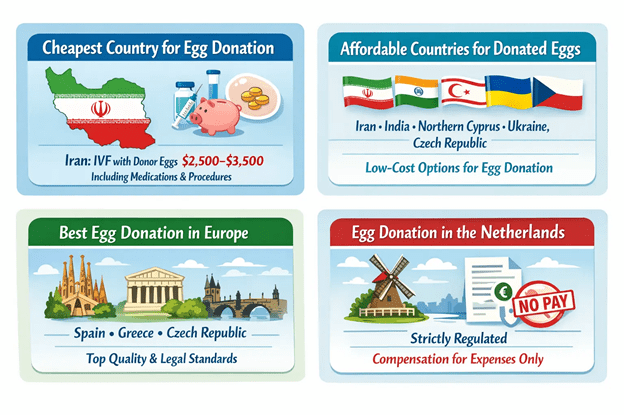
In order to assist intended parents in making decisions based on their medical, legal, and personal requirements, this overview covers some of the top countries for egg donation as follows:
Iran
Iran is one of the most popular countries in the world for IVF with donor eggs because it is the cheapest country for egg donation and could be the best country for egg donation. This country is a dependable location for egg donation treatments because it has licensed IVF clinics, internationally recognized fertility doctors and embryologists, and patient-friendly health legislation that safeguard both the donor and the recipients.
However, same-sex couples and single individuals are not allowed to get fertility treatments in this country because they are exclusively accessible to married heterosexual couples. Additionally, parents’ feelings influence the choice of sex.
The most crucial aspect of IVF with Iranian egg donors is that the maximum cost, which includes prescription medications, pre-operative tests, consultation fees, and egg donor cost, is $3400.
In Iran, religiously regulated options such as Surrogacy in Iran: and egg donation are legally supported under specific conditions, making it a unique destination for fertility care in the Middle East.

Spain
Another European country that offers top-notch fertility treatments is Spain. Hundreds of couples receive IVF treatment in Spain every year because of the country’s exceptional and renowned fertility specialists and hospitals. As a result, the Spanish government has set up international departments in all medical facilities, with staff members who speak English fluently and are prepared to assist foreign patients.
Luckily, there are numerous egg and sperm donation facilities in Spain, so there isn’t much of a waiting list. However, freezing eggs and sperm and pre-IVF testing are expensive in Spain. The egg donation Spain cost of IVF with a donor egg is $7,500, not including medical consultations and embryo scope.
Greece
Greece’s emphasis on ethical treatments and supportive regulations has made it a competitive force in the European IVF market. Greece offers anonymous egg donation and permits IVF treatments for women up to age 50. During the emotionally taxing IVF process, many patients appreciate the more calm treatment experience that the environment and location provide.
Greece strikes a balance between scientific accuracy and practical access; clinics prioritize reducing cycle dropouts, minimizing ovarian hyperstimulation, and time-to-transfer. Greece is an appealing combination of quality and affordability because egg donation prices are still reasonable despite being a member of the Eurozone.
To guarantee that patients can proceed through the consultation-diagnosis-transfer cycle with the least amount of difficulty, the country’s fertility specialists collaborate closely with travel medicine coordinators such as A-Medical.
Czech republic
The donation of eggs and their use in IVF are subject to stringent regulations in this nation. For example, the donor needs to be under 35 and undergo numerous blood and genetic tests. Tens of fertility specialists assist infertile couples in having healthy children in Prague and Brno, two well-liked locations for IVF using donor eggs.
The number of eggs and embryos required for a successful pregnancy, the type and quantity of embryo monitoring, and the doctor’s reputation all affect the total cost of IVF with egg donation in the Czech Republic. The typical cost of an egg donor might be between $3,000 and $5,500.
Cyprus
Northern Cyprus’s adaptable legislation and affordable treatment options have made it a favorite destination for infertility tourists. Patients benefit from easy travel procedures, state-of-the-art IVF facilities, and excellent success rates. Northern Cyprus attracts a lot of foreign couples because of its reasonable egg donation prices and patient-friendly laws.
Couples seeking fertility treatments are flocking to Cyprus because of its cutting-edge medical facilities, skilled professionals, and reasonable costs. This article contains helpful details on IVF treatments, egg donation procedures, and costs in Cyprus.
Does Egg Donation Cost Worth it?
Egg donation can offer hope to a couple who have a missing link in their lives and make their families grow and hope worth the high egg donor cost. Egg donation is a type of fertility treatment in which a healthy qualified woman donates her eggs to another woman in order to get inseminated and have a child.
Donor’s eggs are fertilized in a laboratory environment with sperms of the intended father or a donor to make the embryo. The resulting embryo then is transferred into the recipient’s uterus to hopefully grow into a healthy pregnancy.
Before donation, egg donors will go through some blood tests, including HIV, hepatitis, syphilis, gonorrhea, chlamydia, and HTLV, which are all needed to screen candidates. They will be asked about hereditary diseases that run in their families, and their physical and mental health will be checked.
In the IVF egg donation process, donors will receive hormones to stimulate ovaries and mature multiple eggs instead of only one egg, which is usual in a normal cycle. Then the eggs are retrieved and will be donated to an infertile couple for insemination with the male partner’s sperm and forming embryos.
Then the embryo will be transferred to the intended mother’s uterus or in some cases to a surrogate mother for growing.
There are so many reasons that prevent a woman from having a fertile egg on her own. Having a genetic disorder, absence of ovaries, low-quality eggs, early menopause, and old age can be mentioned as some of the reasons. Egg donors, by providing their healthy eggs, can help these women to make their dream of having children come true.
It should be added that egg donation is a highly regulated and supported fertility treatment. The FDA treats eggs just like any other organ, and it seems to be an easy process according to the laws of most countries.
Does egg donation increase the chances of IVF success?
Yes, compared to using a woman’s own eggs, using donor eggs for IVF treatments can increase the chances of success. Younger people often have healthier, higher-quality eggs, which raises the possibility of fertilization and implantation.
Therefore, using donor eggs would be especially beneficial for elderly individuals and those with limited ovarian reserve. It’s crucial to realize that obtaining donor eggs does not ensure success; additional considerations, such as underlying medical issues, must be made.
Conclusion
Even though donating eggs can be expensive, many people find that it is essential to starting a family. Aside from the apparent egg donor fee, there are other expenses to take into account, therefore it’s critical to account for them all when creating your budget.
TebMedTourism assists with this by offering comprehensive and fully transparent cost breakdowns of each expense that goes into the overall cost of an egg donor. Go to our database of egg donors and we’ll help you filter by your preferences,
A number of countries, including Iran, Spain, Greece, the Czech Republic, and Northern Cyprus, provide high-quality IVF with donor eggs at far lower expenses without sacrificing medical standards or success rates, but egg donation in nations like the United States can be quite costly.