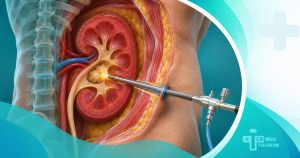






If you are traveling to Iran for kidney stone treatment, knowing why PCNL may be recommended and what to expect before and after surgery can help you plan your treatment more confidently.
One of the main procedures used for large or complex kidney stones is percutaneous nephrolithotomy (PCNL).It gives the urologist direct access to the kidney through a small opening in the back, allowing the stone to be broken and removed.
For international patients considering kidney stone treatment in Iran, understanding when PCNL may be recommended, how the procedure works, and what recovery involves can make treatment easier to plan.
What Is PCNL Surgery?
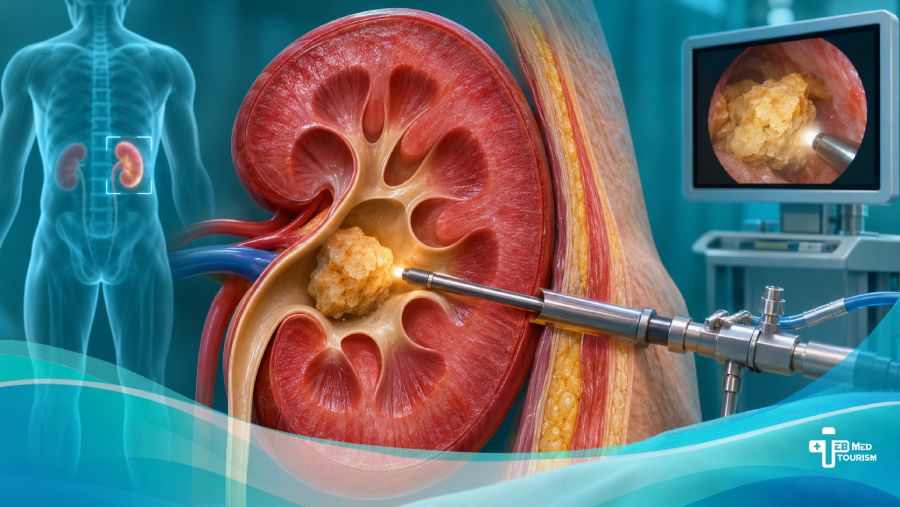
PCNL is a minimally invasive procedure used primarily to remove large or complex kidney stones.
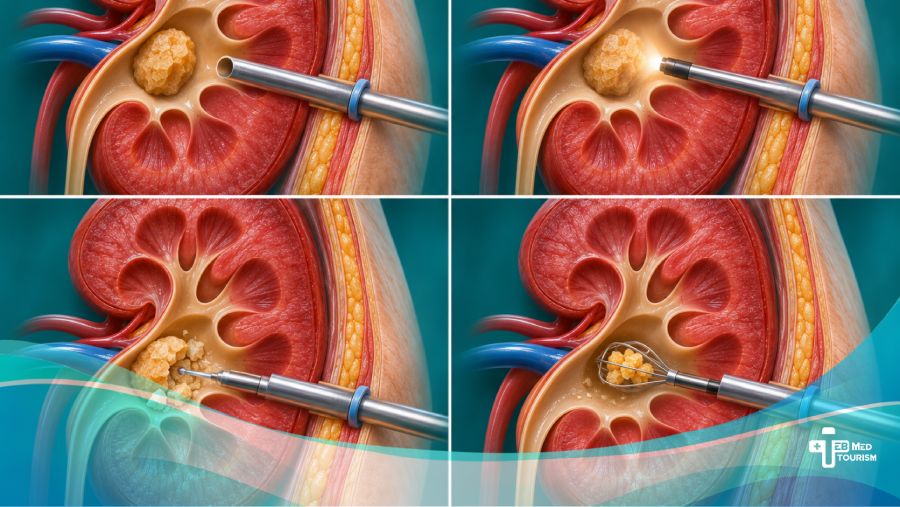
During PCNL, the urologist creates a controlled access tract through the skin of the back and into the kidney. A thin instrument called a nephroscope is then passed through this tract so the surgeon can see the stone directly.
If the stone is too large to remove in one piece, it can be fragmented using technologies such as laser, ultrasonic, or pneumatic lithotripsy. The fragments are then removed through the access tract.
When Is PCNL Recommended for Kidney Stones?
PCNL is commonly used for large kidney stones, particularly stones larger than 2 cm. Current European Association of Urology (EAU) guidance recommends PCNL as a first-line treatment for renal stones larger than 2 cm.
The urologist will also consider factors such as:
- Stone location and number
- Overall stone burden
- Kidney anatomy
- Urinary obstruction
- Suspected or known stone composition
- Previous stone treatments
- Urinary infection
- Other medical conditions
- The patient’s ability to undergo anesthesia
For some patients, ureteroscopy (URS) or shock wave lithotripsy (SWL) may be appropriate alternatives. A review of recent imaging, often including a non-contrast CT scan, helps the urologist understand the stone burden and choose an appropriate treatment.
PCNL Surgery vs. SWL vs. Ureteroscopy
There is no single kidney stone treatment that is suitable for everyone. The main options differ in how they reach and remove the stone.
PCNL
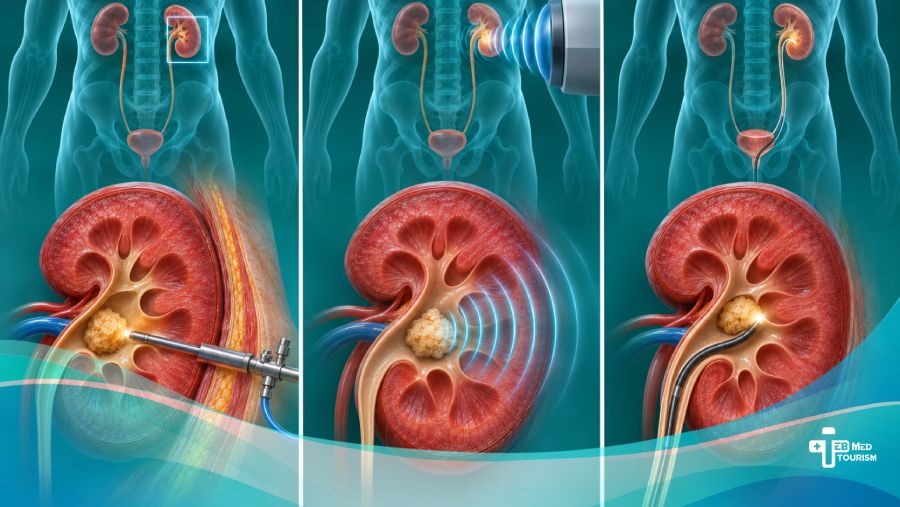
PCNL creates direct access to the kidney through a small opening in the back. It is particularly useful for larger or complex renal stones because the surgeon can reach and remove a substantial amount of stone material during the procedure.
Shock Wave Lithotripsy (SWL)
Shock wave lithotripsy (SWL) uses externally generated shock waves to break a kidney stone into smaller fragments.
It does not require a surgical access tract, but its effectiveness can be affected by stone size, composition, location, kidney anatomy, and the distance between the skin and the stone. Larger stones may require more than one treatment session.
Ureteroscopy (URS)
Ureteroscopy (URS) uses a small scope passed through the natural urinary tract to reach the stone. The stone can then be fragmented, often with a laser, and the pieces can be removed.
URS is widely used for kidney and ureteral stones. Patients with a large stone burden may sometimes need staged procedures to achieve satisfactory clearance.
For renal stones larger than 2 cm, PCNL Surgery is generally the preferred first-line surgical treatment. URS or SWL may be considered in selected patients depending on the stone and individual circumstances.
How Is PCNL Performed?
PCNL Surgery is usually performed under general anesthesia.
Before surgery, the patient may undergo blood tests, urine testing, and imaging. A non-contrast CT scan can help the urologist assess the stone burden and plan the safest access route.
During the procedure, the surgeon establishes an access tract into the kidney, usually with imaging guidance. The nephroscope is then introduced through the tract.
The stone is identified and fragmented when necessary. The fragments are removed, and the surgeon assesses the kidney for significant remaining stone material.
At the end of the procedure, the surgeon may place a nephrostomy tube, a ureteral stent, both, or in selected cases neither. The decision depends on factors such as the complexity of the procedure, bleeding, urinary drainage, and whether additional treatment may be necessary.
What Are the Benefits and Risks of PCNL?
For appropriately selected patients, PCNL Surgery provides direct access to the kidney and is an established treatment for large and complex renal stones.
Potential advantages include:
- Allows substantial stone material to be removed during one procedure
- Can be used for many large or complex renal stones
- Provides direct access to the kidney through a minimally invasive approach
PCNL is still surgery, however, and complications are possible.
Potential risks include:
- Bleeding
- Fever or urinary tract infection
- Residual stone fragments
- Urine leakage
- Injury to nearby structures
- Temporary discomfort from a ureteral stent or nephrostomy tube
- The need for an additional procedure
The risk of complications varies according to stone complexity, kidney anatomy, infection status, other medical conditions, and the surgical technique used.
Why Is Infection Screening Important Before PCNL?
Urinary infection is an important consideration before kidney stone surgery.
An obstructed kidney accompanied by signs of urinary infection or sepsis is a urological emergency. In this situation, urgent drainage—usually with a ureteral stent or nephrostomy—is required rather than proceeding directly to definitive stone removal. Current EAU guidance recommends delaying definitive stone treatment until the infection has been adequately controlled.
For this reason, the medical team may request urine testing and, when infection is suspected, a urine culture before PCNL Surgery.
This is particularly important for international patients. Providing recent urine-test results, culture results when available, imaging, and previous treatment records before traveling can help the treating team identify potential problems early.
What Is Recovery Like After PCNL?
Recovery depends on the complexity of the procedure, stone burden, surgical technique, and the patient’s general health.
Some patients experience discomfort, fatigue, or blood-tinged urine during the early recovery period. A ureteral stent or nephrostomy tube can also cause temporary discomfort or urinary symptoms.
Hospital stay varies from patient to patient. Those with an uncomplicated procedure may leave after a short period of observation, while more complex cases may need to stay longer.
Follow-up imaging may be recommended to assess whether significant stone fragments remain.
Removing a kidney stone also does not necessarily prevent future stones. Depending on the patient’s history, the urologist may recommend stone analysis, metabolic evaluation, dietary changes, increased fluid intake, or other preventive measures.
Choosing a PCNL Center in Iran for International Patients
For international patients, choosing a center for PCNL Surgeryin Iran involves more than comparing treatment prices.
Look beyond the price. The urologist’s experience with PCNL, the hospital’s facilities, access to imaging and laboratory services, postoperative monitoring, and the availability of follow-up care can all affect your experience.
Before traveling, patients may want to ask:
- How experienced is the urologist in PCNL Surgery?
- Can my imaging and medical records be reviewed before I travel?
- How is urinary infection evaluated before surgery?
- What type of postoperative monitoring is available?
- Will follow-up imaging be arranged?
- If a stent or nephrostomy tube is placed, where and when will it be removed?
- What happens if an additional procedure is required?
- Who will coordinate my care if a complication occurs?
For patients traveling internationally, having these questions answered before arrival can make the treatment process more predictable.
Kidney Stone Treatment in Iran for International Patients
International patients considering kidney stone treatment in Iran may need assistance with several parts of the treatment journey—not only the operation itself.
For someone traveling from abroad, the practical side of treatment can be just as important as the procedure itself. Medical records, the specialist consultation, hospital scheduling, and follow-up care may all need to be arranged in advance.
TebMedTourism can assist international patients with coordinating medical consultations, hospital arrangements, and other practical aspects of receiving treatment in Iran.
The treating urologist will make the final treatment decision after reviewing the patient’s medical information.
Conclusion
PCNL is a well-established treatment for large and complex kidney stones, particularly renal stones larger than 2 cm. However, the best treatment depends on the individual patient’s stone, anatomy, medical history, and overall condition.
If you are considering PCNL in Iran, you can start by sending your recent imaging and medical records for review. The treating urologist can then assess whether PCNL Surgery is appropriate and advise you on the next steps before you travel.