






Pros and cons of surrogacy for infertility treatment: One of the newest and most common methods of infertility treatment is surrogacy. This method has brought new hopes to many intended couples who are tired of long-term and ineffective infertility treatments. Understanding the pros and cons of surrogacy helps intended parents make informed decisions.
This process can occur in two ways: Traditional Surrogacy; and Gestational Surrogacy. In the article “What is the most popular type of surrogacy?“, you can read more about the differences between these two methods.
But in short, in the latter case, unlike in the first one, where there will be a biological link between the surrogate mother and the fetus, the surrogate mother merely plays the role of the fetal carrier, and the baby would be genetically linked to both of the infertile parents.
So this method can bring many benefits. In a world where many men and women are infertile for a variety of reasons, this method will allow them to have the opportunity to experience parenthood. But each method, in addition to its advantages, may also have disadvantages and complexities.
Before taking any action, people should consider all aspects of the problem and make informed decisions.
Therefore, in this article, we are going to discuss some of the surrogate mother advantages and disadvantages of the surrogacy method for treating infertility, highlighting the pros and cons of being a surrogate.
What are the advantages of surrogacy?
In examining the pros and cons of surrogacy, we intend to first describe the advantages of this popular method. Surrogacy has many advantages, which is why many people are interested in using this method to treat infertility and have children.
A fresh and hopeful solution
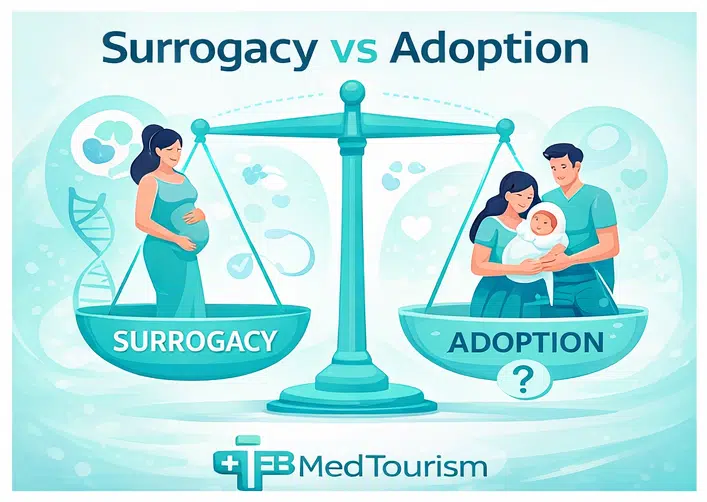
For many parents, for a variety of reasons, such as age, a surrogate mother or surrogacy can be not only an option but also the sole solution to having a child when comparing different options like surrogacy vs adaption.
In this way, they get the opportunity to raise a child from birth and experience the feeling of parenthood. This is one of the main points in the pros and cons of surrogacy discussion.
Genetic relationship
One of the most important advantages of surrogacy over other methods (including adoption) is that there will be a genetic link between at least one infertile parent and the fetus.
This method can happen in different ways:
- Fertilization of the original father’s sperm and the original mother’s egg;
- Fertilization of the original father’s sperm and donor egg;
- Fertilization of donor sperm and the original mother’s egg.
So, as it turns out, this genetic link can be made in many different ways. If you are interested in the genetic relationships and their influence on the future baby, you can read “Will the baby look like the surrogate mother?” This flexibility is another advantage in the pros and cons of surrogacy.
Success rate of surrogacy
Since 1986, when the first pregnancy was performed by the surrogacy method, this method has advanced a lot and has improved many of its errors. Advances in medical technologies, including IVF in Iran, and the professionalism of medical counseling teams in finding suitable surrogate mothers are other reasons for the high success rate of this approach.
On the other hand, since one of the prerequisites for being a surrogate mother is that the person should have a history of at least one pregnancy and childbearing, unlike other methods of infertility treatment in Iran, the likelihood of failure in this process is low. This is an important positive factor when considering the pros and cons of surrogacy.
Appropriate legal support and mechanisms
In examining the pros and cons of surrogacy, appropriate legal support and mechanisms are one of the most important things that are considered an important advantage for this method. In many countries around the world, such as surrogacy in Iran and surrogacy in Georgia, there are appropriate legal mechanisms to support this method of infertility treatment. Also, the legal barriers and complexities of this method will be much less compared to the “adoption” method.
However, it is still necessary to consult with a professional medical consulting team to get things done right so that everything goes well for you and your child.
The consultant medical doctors of TebMedTourism Co. are also here to guide you on this path from the start to the end. Proper legal support is another aspect included in the pros and cons of surrogacy, especially when considering surrogacy laws by country.
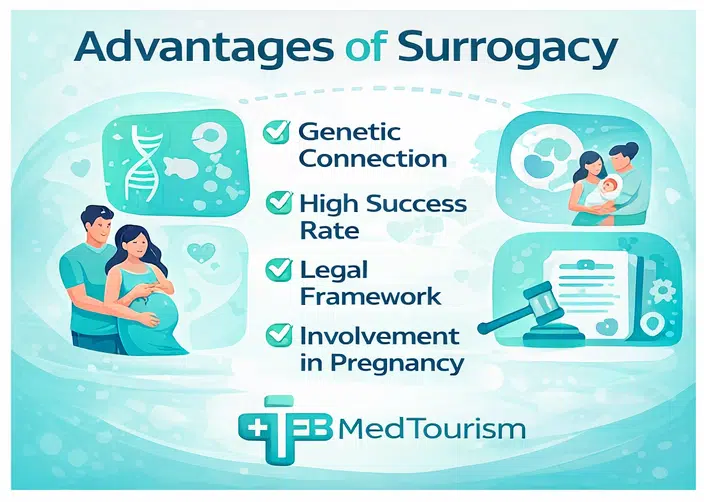
Being involved
This method will allow intended parents to be involved in various milestones in the pregnancy process of surrogacy and to be beside the surrogate mother throughout the whole thing. This will bring them many benefits, both emotionally-psychologically and medically.
We talked about the advantages of this method, but what will be its difficulties and disadvantages? This is why understanding “Is surrogacy good or bad?” is critical.
Other advantages of surrogacy are as follows:
- Possibility of planned multiple births (twins/triplets)
- Reducing stress caused by permanent infertility
- Lower medical risks compared to more complex methods
- Full control over the pregnancy process
- Ability to select and find the surrogate mother based on desired criteria

What are the disadvantages of surrogacy?
After mentioning the advantages of surrogacy, it is time to examine the disadvantages of this method in the topic of pros and cons of surrogacy. Surrogacy can help people who cannot get pregnant for various reasons have a baby. Despite adoption, in the surrogacy process, you raise a kid who biologically belongs to you.
While surrogacy is one of the most practical options for many infertile couples to have babies and grow their families, it can have some disadvantages at the same time. We will discuss the potential cons of being a surrogate mother below, which are key to evaluating the surrogate mother advantages and disadvantages.
Relatively high costs and financial commitments
This is not an easy decision, and it is going to involve lots of people, from the intended parent to the surrogate mother, medical teams, and infertility clinics, as well as legal authorities. Therefore, there must be proper financial preparation on the part of the intended parents.
However, there are ways to reduce the costs of this method, one of which is to do and operate it in countries like Surrogacy in Iran. While in a country like the United States, a budget of $150,000 is required for this action; in Iran, despite advanced medical facilities, surrogacy cost will be significantly reduced.
If you are curious to know more about the costs of surrogacy in Iran, you can consult us for free right now.
The matter of trust
Unlike natural pregnancies, infertile parents leave the health of their baby in the hands of a stranger. Although certain processes take place before choosing a surrogate mother to ensure an appropriate choice, parents still have to come to terms with the fact that they are supposed to trust another human being to eventually deliver their baby safely.
Of course, in many cases, over time, a deep bond and friendship will develop between the infertile parents and the surrogate mother, which can ultimately facilitate the process of trust between them and bring peace of mind to both sides. This emotional aspect is another part of the pros and cons of being a surrogate.
Countless legal procedures
While legal supports are a good thing, sometimes these processes can be very time-consuming and frustrating. Also, in many countries, such as France, Germany, Italy, etc., this method is only acceptable when it applies as “altruistic surrogacy,” and, therefore, other methods of that will face barriers, making international surrogacy arrangements complex.
Finding a professional medical team
One of the most critical aspects of a surrogacy procedure is finding the right medical counseling team to take care of the action. Both intended parents and surrogate mothers need to make sure they make the right professional choice to minimize their concerns, both medically and legally.
If you want to know more about ways of finding a suitable agency, read “Find Surrogate Mother.”
Besides the issues explained above, you may still have some other doubts about surrogacy. If you are interested, you can read the related articles “Surrogacy in Islam” and also “Surrogacy for HIV-Positive Couples.”
You can also explore surrogacy in Georgia for international considerations.
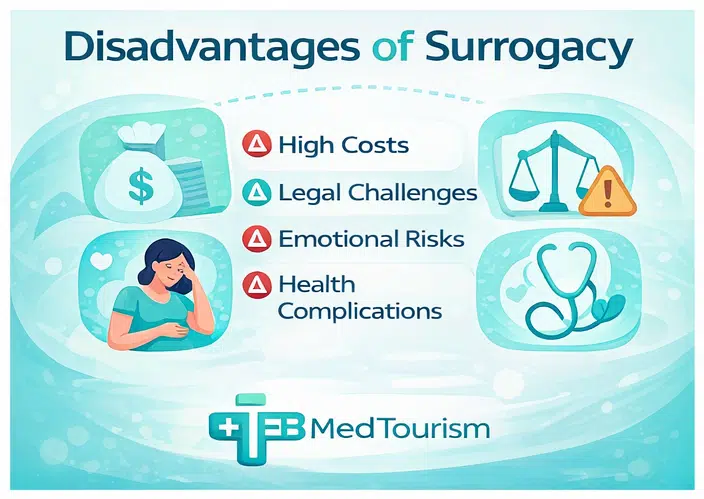
Risk of miscarriage or fetal abnormalities
Although surrogate miscarriages are less frequent compared to typical pregnancies, they could still happen. Such miscarriages occur in about 10% of surrogate pregnancies. This is due to the fact that in order to become a surrogate, you must fulfill certain conditions and go through a rigorous screening procedure.
Risks of multiple pregnancy and its medical complications
Low birth weight (which can directly cause developmental or neurological abnormalities), the requirement for Caesarean sections, the possibility of pre-eclampsia, and an increased risk of gestational diabetes are all major concerns connected to multiple pregnancies, in addition to premature delivery.
Every pregnancy carries specific risks; however, the risks linked to twin births are significantly greater. Research indicates that singleton births carry a 9% likelihood of leading to low birth weight and a 14% likelihood of premature delivery. In contrast, twin births elevate these risks to 57% and 65%, respectively.
Risk of exploitation or fraud in countries with unclear legal regulations
Surrogate mothers and intended parents may face considerable risks in countries where surrogacy regulations are lax, ambiguous, or poorly enforced.
Some of these risks include financial fraud, misleading promises, inequitable contracts, insufficient medical protection, and the exploitation of vulnerable women. In certain cases, surrogates might not receive proper compensation and medical care, or agencies could disappear after receiving payment.
Moreover, disputes regarding parental rights, financial responsibilities, and custody may arise in the absence of stringent legal oversight, resulting in emotional and legal pressure on all individuals concerned.
To ensure safety, fairness, and ethical practices in surrogacy, it is essential to choose countries that possess clearly established regulations, certified agencies, and strong legal frameworks.
Risks of surrogacy for the surrogate mother
While surrogacy helps many families, surrogate mothers face real physical, emotional, and social risks. This is a major consideration in the pros and cons of being a surrogate.
Pregnancy complications
Surrogate mothers encounter the same pregnancy-related risks as any other expectant woman, which include high blood pressure (preeclampsia), gestational diabetes, anemia, preterm labor, and excessive bleeding. Multiple embryo transfers can increase these risks.
Blood clots and embolism
Pregnancy naturally increases the risk of blood clots. Surrogates may face deep vein thrombosis (DVT) and pulmonary embolism (life-threatening if untreated). The risk is higher with bed rest, obesity, long travel, and hormonal treatments.
Severe infection
Following a surrogacy, infections can occur after embryo transfer, after cesarean section, after delivery, and from retained placental tissue. Severe infections may require hospitalization and can be life-threatening in rare cases.
Side effects of hormonal medications and IVF
The side effects of hormonal drugs and IVF are one of the most important disadvantages when considering the pros and cons of surrogacy. Before implantation, surrogates often take hormones such as estrogen and progesterone, which may cause headaches, mood changes, weight gain, nausea, fatigue, and ovarian cysts (which are rare). In some cases, ovarian hyperstimulation may occur, too.

Breastfeeding problems and lactation suppression
After birth, milk production begins naturally.If the baby is handed over right away, problems may follow, such as breast expansion that causes pain, mastitis (breast infection) danger, and mental suffering. On the other hand, medications to stop milk production may also cause side effects.
Legal and financial issues in case of contract breach
If agreements are unclear or violated, payment delays may occur, medical expenses may not be covered, legal disputes may arise, and surrogates may face financial stress. This is a crucial aspect of the pros and cons of surrogacy of surrogacy and is more prevalent in uncontrolled or informal agreements.
Postpartum depression and separation from the baby
After giving birth, a woman’s body goes through major hormonal changes that might affect her mood and mental health. In surrogacy, the intended parents receive the baby from the surrogate mother soon after birth, and this quick separation may be emotionally traumatic.
In addition, hormonal changes after birth, combined with emotional separation, can lead to depression, anxiety, feelings of loss, and emotional exhaustion.
Social stigma and family pressure
In some nations and countries, surrogates may experience some cultural pressures that can negatively affect mental health. These issues include judgment or criticism, social isolation, family conflict, and pressure to hide the pregnancy. This social impact is an important factor in the pros and cons of commercial surrogacy.
Conclusion
When considering the pros and cons of surrogacy, safety is the top consideration in this procedure. Twin pregnancy may also appear appealing, but there are too many concerns in terms of health, morality, and the law. Because of this, experts in assisted reproduction and top clinics regularly advise transferring a single embryo.
You should make an informed choice after learning about the pros and cons of surrogacy and medical advice regarding a single versus dual embryo transfer. Check your eligibility to work with us as a gestational surrogate by getting a free consultation.