




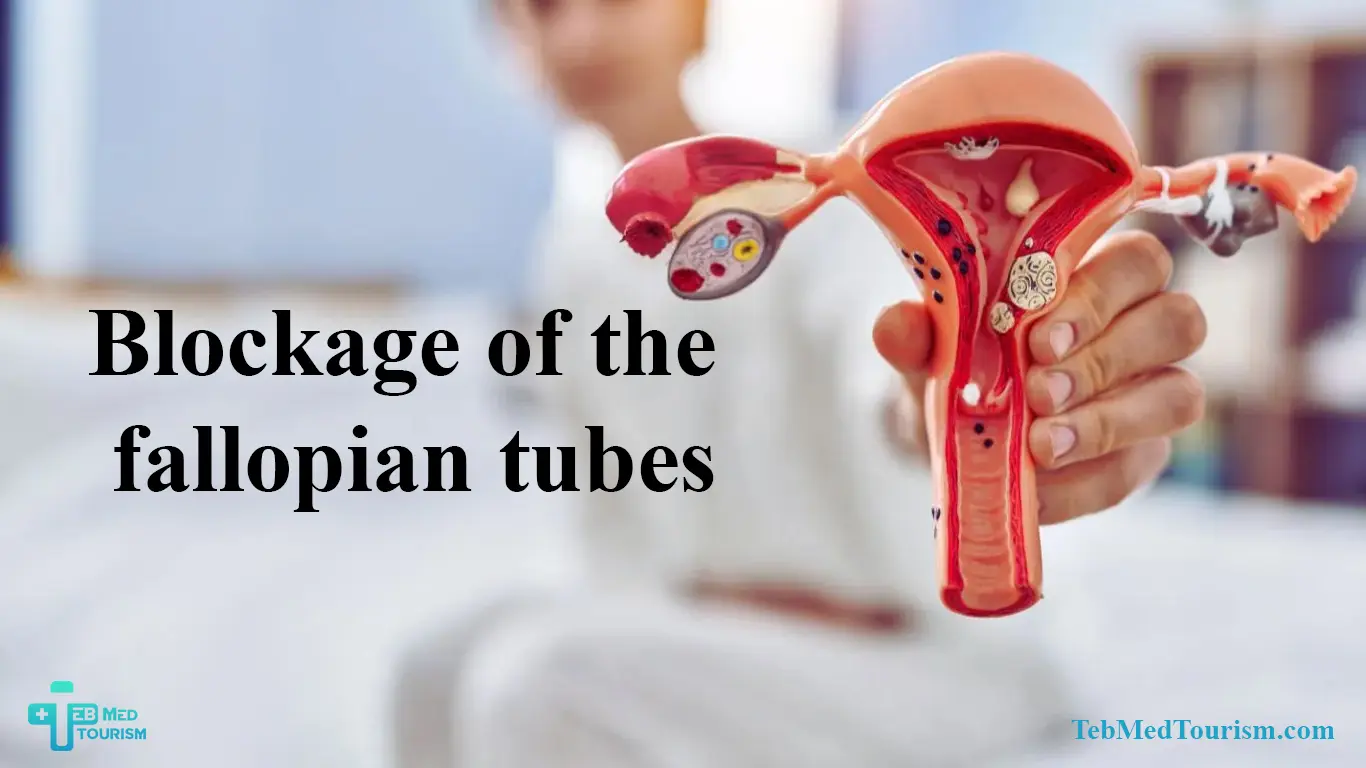
Blockage of the fallopian tubes is a condition that may simply cause difficulty in getting pregnant. A woman with blocked fallopian tubes may have symptoms like pelvic or abdominal pain and experience this discomfort consistently or on a regular basis during their period.
A fertilized egg may occasionally become lodged in the fallopian tube due to obstruction. We refer to this as an ectopic pregnancy. This is not immediately picked up by a scan, and a woman may exhibit pregnancy-related symptoms including vaginal bleeding and stomach ache on one side of her body.
What is blocked fallopian tube?
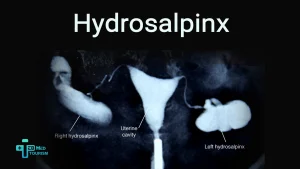
Hydrosalpinx is a type of fallopian tube blockage, happens for women due to fluid accumulation and tube dilatation at the end. It can occur at the opposite end of the tube that connects to the uterus, but it usually happens at the fimbrial end of the tube near to the ovary. The Greek words hydro, which means water, and salpinx, which means tube, are the origin of the name “hydrosalpinx.”
One type of tubal factor infertility is blockage of the fallopian tubes. The fallopian tube dilates when it is blocked because the cells inside the tube secrete fluid that is unable to leave. By preventing an ovulated egg from traveling from the ovary to the fallopian tube for sperm fertilization, this stops fertilization and, consequently, pregnancy.
The hydrosalpinx would still probably prevent the developing embryo from entering the uterus for implantation and pregnancy even if an ovulated egg managed to unite with a sperm for fertilization. Additionally, it may result in a potentially fatal ectopic pregnancy, where the embryo implants outside the uterus, usually inside the fallopian tube.
Bilateral hydrosalpinx occurs when hydrosalpinx develops in one fallopian tube and is frequently found in the other.
Treatment for infertility may potentially be negatively influenced by hydrosalpinx. According to the National Institutes of Health, the success of assisted reproductive technologies, including IVF, is cut in half when a woman has hydrosalpinx fluid. Because of this, women who wish to become pregnant through IVF in Iran or other international fertility programs are frequently advised to have the hydrosalpinx surgically removed prior to IVF treatment.
Furthermore, if the woman does become pregnant (either naturally or through fertility treatment), the presence of hydrosalpinx seems to have an impact on a successful pregnancy.
Although the exact origin of this is unknown, scientists believe that hydrosalpinx toxically affects eggs and embryos as well as the endometrium, which leads to poor embryo implantation and growth.
Types of blocked fallopian tubes
Each kind of blocked fallopian tubes may have a unique origin and call for particular diagnostic procedures and medical interventions. Fallopian blockage treatment is crucial for those with infertility or other reproductive health problems. Let’s consider different types of blocked fallopian tubes:
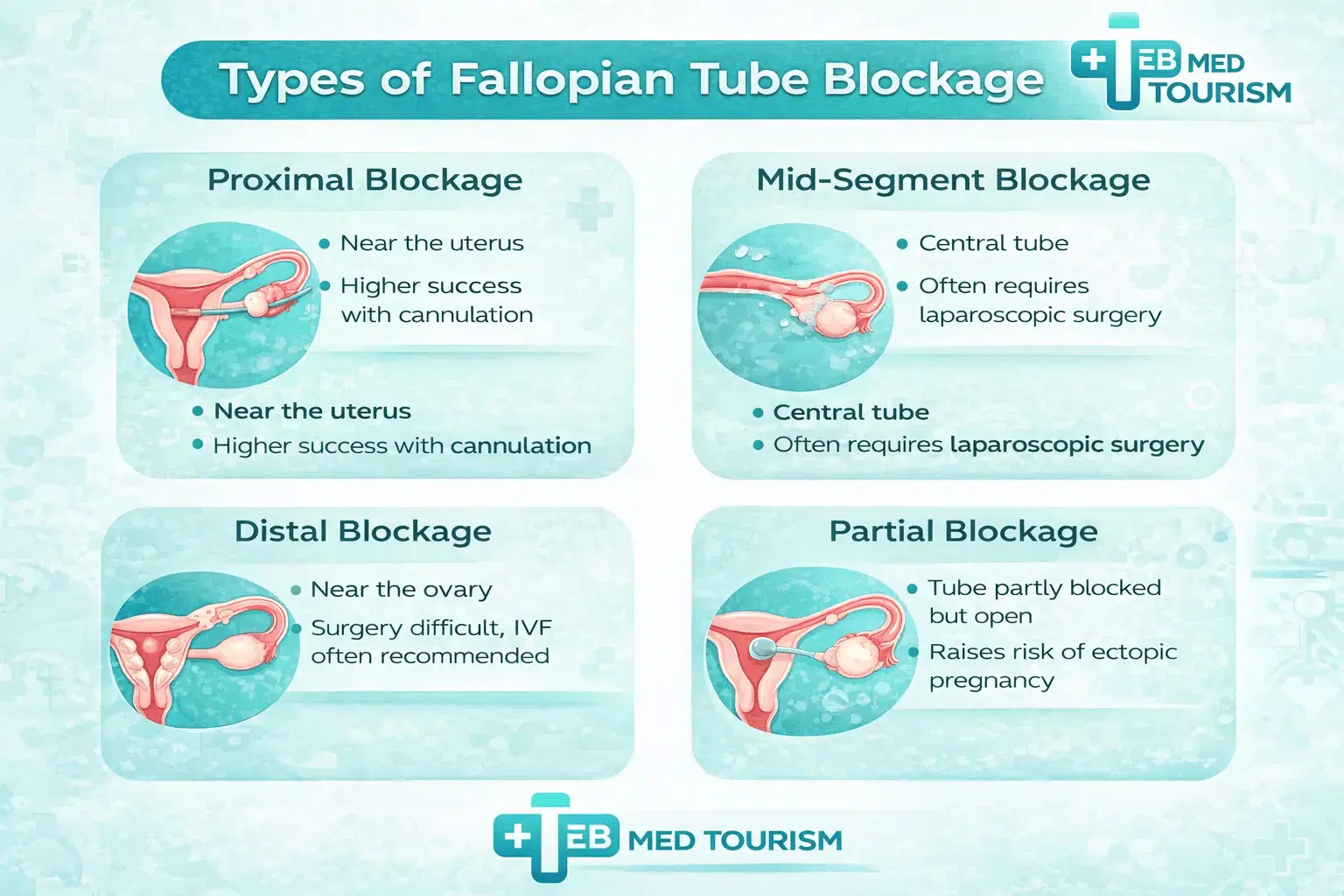
Proximal tubal blockage
Conventional treatment is most successful in opening fallopian tubes that are blocked proximally. A technique where a catheter is placed through the uterus and into the fallopian tube is typically advised by doctors. Once there, the tube may be attempted to be opened using a balloon. Women have a window of opportunity to conceive thanks to the high success rate of proximally obstructed fallopian tubes.
Distal tubal blockage
The most difficult to cure are distally blocked fallopian tubes. A surgeon might not be able to remove adhesions without harming the delicate fimbria because of the blockage’s proximity to them. Additionally, the region is more difficult to reach, and the ovary may be covered if adhesions regrow. Due to the success rates, doctors typically recommend IVF rather than surgery for this kind of obstruction, especially as part of comprehensive infertility treatment in Iran programs.
Mid-segment blockage
The blockage is more difficult for the physician to reach if it is situated medially. In most cases, doctors advise laparoscopic surgery, which involves cauterizing adhesions, cutting the tube, and then connecting it. Success rates for medially blocked fallopian tubes are lower because the treatment is more difficult and scar tissue can readily form and obstruct the tube.
Complete blockage
When the fallopian tube is completely blocked, the sperm and egg cannot contact or move through the tube because the tube is completely closed. Natural fertilization through that channel is totally prevented as a result.
One tube may be completely blocked (unilateral), or both tubes could be obstructed (bilateral). Pregnancy may still happen through the other healthy tube if just one is totally blocked. It is impossible to become pregnant naturally if both tubes are totally blocked up.
Severe infection, pelvic inflammatory disease, STDs, endometriosis, prior pelvic surgery, or tuberculosis are the most common causes of complete obstruction. These disorders eventually result in fibrosis and scarring, which permanently seal the tube.
Partial blockage
When the fallopian tube is partially blocked, it narrows but does not entirely close. Sperm or the egg may still be able to flow through, but it will be challenging.
Fertilization is still possible because the tube is only partially open, but the likelihood of getting pregnant is decreased. Because a fertilized egg may become caught en route to the uterus, partial obstruction also raises the possibility of an ectopic pregnancy.
Mild infection, endometriosis, early pelvic inflammatory disease, and slight scarring from prior surgery or inflammation are the most common causes of partial obstruction. The tube is not completely destroyed, in contrast to total blockage.
Hydrosalpinx
When fluid builds up in the fallopian tubes due to an injury or medical condition, hydrosalpinx develops. A woman may find it more difficult to conceive as a result of the obstruction.
Salpingitis isthmica nodosa
Fallopian tube inflammation is referred to as salpingitis. Bacterial infections, especially sexually transmitted infections (STIs) like gonorrhea and chlamydia, are typically the reason.
One kind of pelvic inflammatory disease (PID) is salpingitis. Infertility and an increased chance of ectopic pregnancy can result from PID’s scarring and blockage of the fallopian tubes if treatment is not received.
Adhesion-related blockage
When bands of scar tissue, or adhesions, develop around or on the fallopian tube and impede its opening or movement, this is known as adhesion-related occlusion of the tube.
These adhesions typically result from inflammation, endometriosis, prior abdominal or pelvic surgery, or pelvic infections. The egg cannot enter or pass through the tube correctly because the external scar tissue twists, pulls, or compresses the tube, even though the tube itself may not be closed from the inside.
Blockage caused by adhesion may be partial or whole. It raises the likelihood of an ectopic pregnancy and decreases fertility by obstructing the tube’s regular ability to pick up the egg.

Congenital blockage
A fallopian tube blockage that exists from birth is known as a congenital obstruction. It occurs as a result of abnormal fallopian tube formation during fetal development.
This kind of obstruction could be caused by a tube’s closure, narrowing, or lack of a tube. One tube (unilateral) or both tubes (bilateral) may be impacted. Many ladies only find out about infertility during investigations because they don’t exhibit any signs.
Surgery or infection do not induce congenital obstruction. It is caused by reproductive tract developmental abnormalities and may be linked to other uterine or genital tract disorders.
Unilateral blockage
A fertilized egg may occasionally become lodged in the fallopian tube due to obstruction. We refer to this as an ectopic pregnancy. This is not immediately picked up by a scan, and a woman may exhibit pregnancy-related symptoms including vaginal bleeding and stomach ache on one side of her body.
Bilateral blockage
Eggs cannot move from the ovaries to the uterus and sperm cannot reach the egg when both fallopian tubes are totally closed, a condition known as bilateral blockage of the fallopian tubes.
Natural conception is typically not possible since both tubes are obstructed. Severe vaginal infections, endometriosis, adhesions, or prior surgeries are frequently the cause of this kind of blockage.
Symptoms of blocked fallopian tube
One side of the abdomen may experience minor but persistent pain due to blockage of the fallopian tubes. This typically occurs when fluid fills and enlarges a blocked fallopian tube, a condition known as a hydrosalpinx.
Conditions such as endometriosis and hormonal disorders like PCOS can worsen blocked fallopian tubes symptoms by increasing pelvic inflammation and menstrual irregularities, thereby raising the risk of tubal obstruction.
For example, pelvic pain and heavy, painful periods are common symptoms of endometriosis. Fallopian tube obstruction may become more likely as a result of these symptoms.
The following are typical signs of obstructed fallopian tubes:
Altered fluid dynamics in the reproductive system may result from abnormal vaginal discharge or occlusion of the fallopian tubes. Women may also feel uncomfortable during the menstrual cycle, called painful menstruation, due to pressure and fluid behind obstructed fallopian tubes.
Pelvic discomfort is a frequent sign of the illness that follows inflammation or obstruction in the fallopian tubes.
The surrounding abdominal structures may be impacted by the occlusion of the fallopian tubes, which could ultimately result in abdominal discomfort.
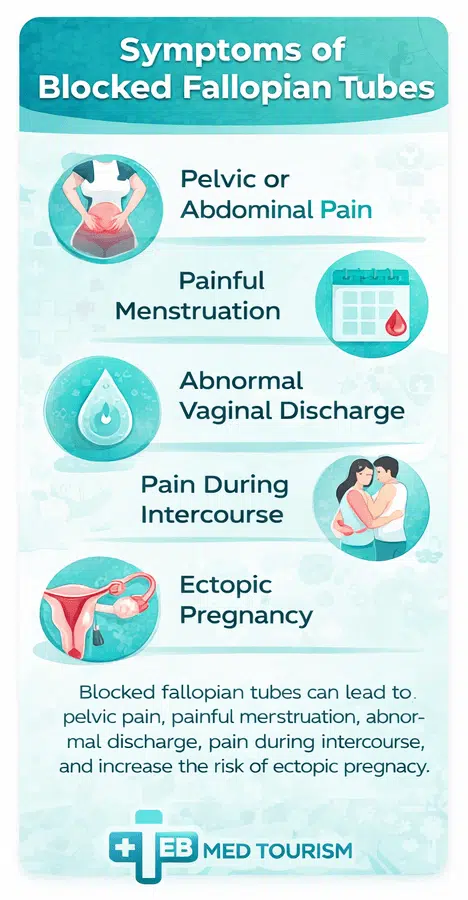
Women with the disorder may have difficulty getting pregnant because the obstruction of the fallopian tubes hinders the flow of sperm and eggs. Pain during urination may result from inflammation and pressure on nearby structures.
The dynamics of sexual activity may also be impacted by obstruction and inflammation of the fallopian tubes, resulting in pain during intercourse.
It’s necessary to remember that many women may not be aware of the obstruction until they have trouble getting pregnant, since the problem is frequently asymptomatic. It is advised to speak with a healthcare professional if you do encounter any of the aforementioned symptoms.
Causes of blocked fallopian tube
One of the main causes of blocked fallopian tubes is adhesions. Pelvic inflammatory disease (PID), endometriosis, infections, previous operations, or ectopic pregnancies can all cause these internal scars.
Adhesions can stay in the body for a lifetime after they form.
They can result in hydrosalpinx, a condition where the tube swells when they originate at the distal end of the tube, close to the ovary.
Anywhere in the pelvis and throughout the tube, adhesions can develop and spread. They can connect to other structures or constrict reproductive structures wherever they originate, which may lower fertility and even cause pain.
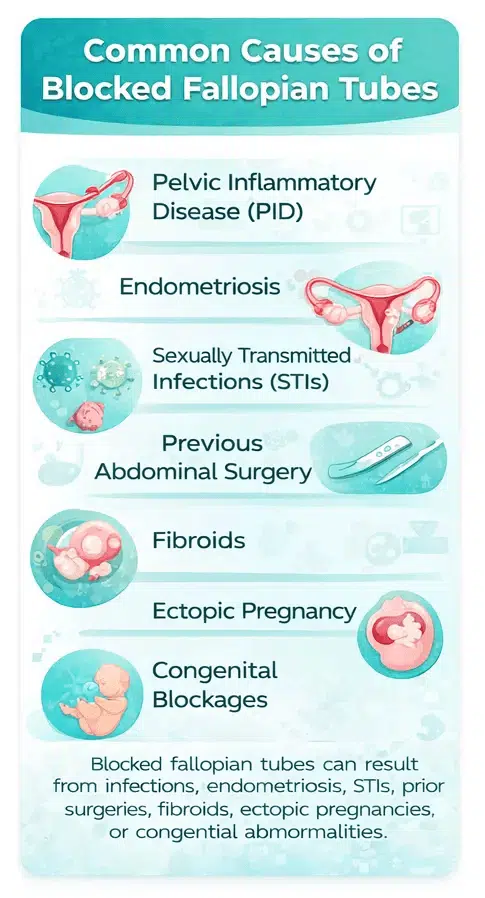
The following are the most frequent reasons why fallopian tubes get blocked:
- Endometriosis: It’s possible that some women are unaware that endometrial tissue might accumulate in the fallopian tubes and obstruct them. A tubal obstruction may also result from the development of endometrial tissues on the outside of other organs.
- Sexually transmitted infections (STIs): Scarring from gonorrhea and chlamydia can result in obstruction.
- Pelvic inflammatory disease: This condition can result in infections and tissue scarring, which can lead to hydrosalpinx.
- Fibroids: The fallopian tubes may become blocked by the growth of fibroids that are connected close to the uterus.
- Previous ectopic pregnancy: Due to tissue scarring, ectopic pregnancy might obstruct the fallopian tube.
- Previous abdominal surgery: Adhesions, or scarring, from prior fallopian tube procedures may obstruct the pipes.
How does blocked fallopian tubes affect fertility?
Fallopian tube injury or blockage affects more than 30% of women with infertility. Other names for this disorder include tubal occlusion, tubal infertility, and tubal disease.
A woman’s ovaries and uterus are connected via the fallopian tubes, a reproductive organ. Eggs leave the ovaries and enter the fallopian tubes when a woman ovulates. From the vagina, sperm passes through the uterus and into the fallopian tubes, where it combines with the egg and may fertilize it.
Pregnancy requires the resultant embryo to pass from the fallopian tubes to the uterus after fertilization.
Ways to diagnose blocked fallopian tubes
It can be challenging to diagnose blockage of the fallopian tubes. It can be difficult to determine if the tubes are obstructed or simply closed because they can open and close.
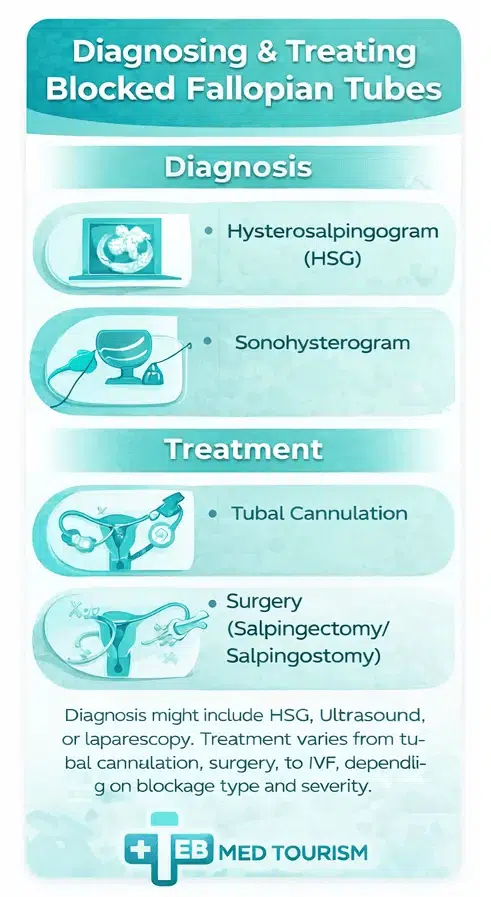
To identify blocked fallopian tubes, three essential tests are used:
A hysterosalpingogram, or HSG, is an X-ray test. A safe dye is injected into the womb by a physician, and it should enter the fallopian tubes. An X-ray shows the stain. They can have a blockage if the fluid does not enter the fallopian tubes.
A sonohysterogram is an ultrasound test. This test is quite similar to the HSG test; however, it creates an image of the fallopian tubes using sound waves.
For blocked fallopian tubes, a laparoscopy is the most reliable test. However, because this test is intrusive and cannot address the problem, physicians might not suggest it as an early diagnosis.
Based on a patient’s medical history, a doctor might be able to recommend a diagnosis. A lady might have experienced an appendix rupture, for instance. If a woman has had trouble getting pregnant, blocked fallopian tubes may be a probable reason.
Treatment methods for blocked fallopian tubes
In the rest of this article, we will examine the most important ways to treat the blockage of the fallopian tubes.
Hydrosalpinx treatment and surgery
A doctor will typically perform a salpingectomy or a salpingostomy to treat hydrosalpinx, which is a condition where a blockage in the fallopian tubes causes fluid accumulation. A portion of the obstructed fallopian tube is removed during a salpingectomy. Compared to other potential surgical therapies, this technique increases the chance of becoming pregnant with IVF.
A doctor makes a fresh incision in the fallopian tube close to the ovary during a salpingostomy. The fallopian tubes can then receive eggs from the ovaries through the newly created hole. This new aperture may occasionally develop scar tissue over time, creating a new obstruction.
The fimbrioplasty, a version of the salpingostomy, entails making a fresh incision and reconstructing the fimbriae (tissue close to the ovaries). Depending on where the obstruction is located, doctors may advise either course of action.
Usually, each of these procedures necessitates a hospital stay of two to three days and a recuperation period of four to six weeks. New fallopian tube scar tissue growth, an increased risk of ectopic pregnancy, and surgical complications such as blood loss, discomfort, and organ or tissue damage are among the risks associated with the procedures.
Tubal cannulation
Fallopian tube obstructions, particularly those nearest to the uterus, can be treated nonsurgically with tubal cannulation. A catheter is guided by a physician via the uterus and vagina to the obstruction during this surgery.
During the procedure, the doctor can determine the precise location of the obstruction with the use of ultrasonography or X-rays. The obstruction will then be removed by the doctor using a fine wire or a tiny balloon.
There are few hazards and little downtime associated with tubal cannulation. Infection and rupturing the fallopian tube wall are among the risks.
Unlock your fertility potential with TebMedTourism’s free consultation and request info. Learn about their innovative, non-surgical method that has effectively cleared all three kinds of fallopian tube blockages, providing hope for natural conception without the risks of conventional surgery.
Tubal ligation reversal
Blockages from the fallopian tubes that were inserted or added during a prior tubal ligation surgery are surgically removed by a physician during tubal ligation reversal. In a technique known as tubal reanastomosis, a physician often reverses a tubal ligation by removing the fallopian tube segments that are obstructed and reattaching the two ends of each tube.
A physician will determine whether the lady is a good candidate for tubal ligation reversal before scheduling the operation. The best probability of getting pregnant naturally following tubal ligation reversal is for women who had tubal ligation utilizing tubal rings or clips.
The recovery period for the treatment, which is regarded as an abdominal surgery, is two weeks. Infection, blood loss, scarring, and a higher risk of ectopic pregnancy are among the risks associated with tubal ligation reversal.
What happens if blocked fallopian tubes is left untreated?
Untreated hydrosalpinx raises your risk of miscarriage and problems like ectopic pregnancy while decreasing your chances of getting pregnant. Your chances of having a healthy pregnancy are significantly increased by receiving treatment.
Conclusion
Blockage of the fallopian tubes is one of the primary reasons for female infertility; however, many women can overcome this challenge with the right diagnosis and care. We at TebMedTourism are dedicated to giving you the information and assistance you require to overcome this illness.
Considering one’s medical background can be beneficial while making pregnancy plans. Risk factors for blocked fallopian tubes may include a woman’s history of surgery in this region of her body or a pertinent infection. A potential reason for infertility may be identified with the help of these factors.