



A frozen embryo transfer (FET) is the process of implanting a fertilized egg and sperm into the uterus of an intended mother or surrogate. Your fertility specialist will use a pelvic ultrasound to guide this transfer because the precise placement of the embryos within the uterus is crucial.
Embryo transfers can greatly increase the chances of conception for intended parents as part of the in vitro fertilization cycle. In order to successfully conceive and give birth, intended parents who experience male factor infertility, female factor infertility, or both frequently turn to infertility treatment such as IVF.
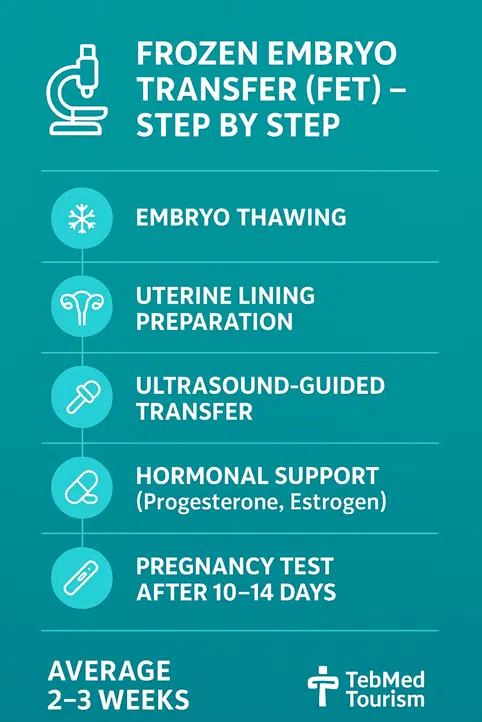
In this guide, we’ll define the frozen embryo transfer, its different kinds, and the process of transfer — essentially a Frozen Embryo Transfer Step by Step overview to help patients understand the journey from preparation to implantation.

What is a Frozen Embryo Transfer (FET)?
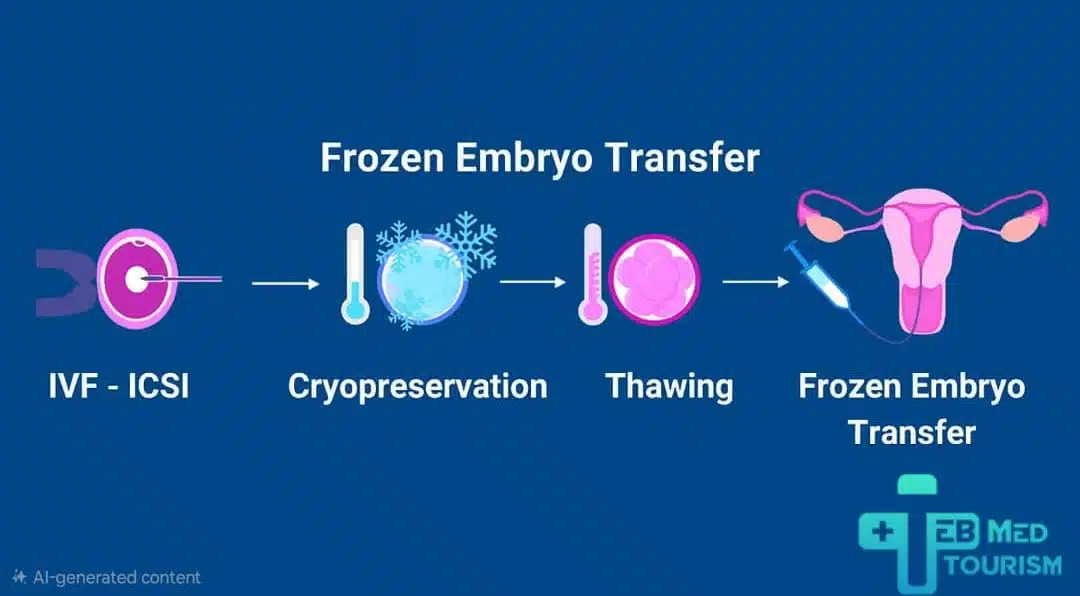
The process of transferring a previously vitrified embryo to a patient is known as frozen embryo transfer (FET) or “cryopreserved” embryo transfer.
In a frozen transfer timeline, one or more embryos that were frozen during a prior treatment cycle are thawed and then transferred to the uterus in an attempt to conceive.
Some patients may have extra high-quality embryos that can be preserved for later use. A Frozen Embryo Transfer (FET) cycle is an IVF procedure that uses frozen embryos—another common term for this process is the IVF frozen embryo transfer timeline, since it maps the critical stages from embryo freezing to implantation.
The frozen embryos can be thawed and transplanted as part of a natural or controlled/artificial thaw cycle if you choose to use them later. This eliminates the need for injections or egg collection. Many patients also wonder about fresh vs frozen IVF, as each has unique advantages depending on medical and personal circumstances.
Why Choose a Frozen Embryo Transfer?
Because a more natural environment in the uterus during a later cycle may have a higher chance of producing a pregnancy, fertility specialists are increasingly recommending frozen embryo transfer.
Freezing embryos is an option for a woman who wishes to delay getting pregnant until her late 30s or early 40s but is aware that she might not have appropriate eggs by then.
This option is now widely used in infertility treatment in Iran, where top fertility centers like TebMedTourism provide cost-effective, world-class reproductive services.
Types of frozen embryo transfer
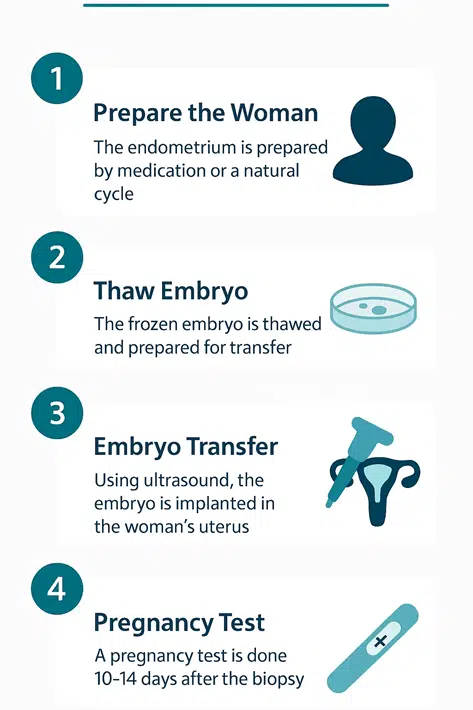
The endometrium, the lining of the uterus, must be prepared to the proper stage in either a “natural cycle” or a “hormone replacement therapy cycle,” as described below, before a frozen embryo can be placed inside your uterus.
Natural cycle/Ovulation induction thaw cycle
In this type of natural cycle FET, transvaginal ultrasound scans and blood or urine tests are used to track the woman’s menstrual cycle if it is regular in order to forecast ovulation and determine the best time to transfer an embryo.
Patients with irregular menstrual cycles may occasionally use medicine to stimulate ovulation (ovulation induction cycle). This type of natural frozen embryo transfer relies on the body’s own hormonal rhythm rather than artificial medication to prepare the uterine lining.
Monitoring of follicle and endometrial development
For a frozen embryo transfer (FET), monitoring follicle and endometrial development entails routine transvaginal ultrasounds to measure follicle growth and endometrial thickness, frequently in conjunction with blood tests to measure hormone levels.
During the first part of the menstrual cycle, follicular tracking uses ultrasonography to track the growth of ovarian follicles. It determines the ideal window for fertility as well as the dominant follicle that will ovulate. This makes it possible to schedule sexual activity, insemination, or egg retrieval procedures precisely.
By coordinating the uterine lining’s preparedness with the embryo’s developmental stage, either in a natural cycle or with hormone replacement therapy (HRT), the ideal moment for embryo transfer is to be determined.
Monitoring for LH surge
In a natural cycle frozen embryo transfer (FET), monitoring for an LH surge entails a combination of daily at-home urine tests and/or hospital-based monitoring, which includes blood tests for hormone levels (LH, estradiol, and progesterone) and transvaginal ultrasounds to track follicle growth. This way, the precise time between gg retrieval and frozen embryo transfer will be determined.
Documentation of Evaluation
The methodical process of documenting and preserving proof of assessment, quality control, and program efficacy to guarantee standards are fulfilled, promote ongoing development, and satisfy legal requirements is referred to as the documentation of evaluation in FET.
Embryo transfer
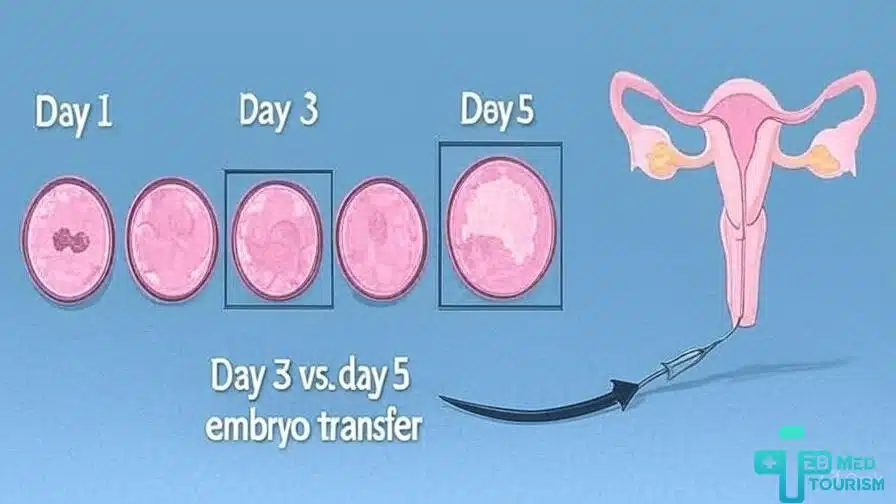
The stage at which your embryos were frozen will determine the day of the embryo transfer. Blastocysts, or embryos frozen at a later stage of development, will be transferred later than embryos frozen at an earlier stage.
On the day of the planned frozen embryo transfer, the embryos are thawed. The actual process of transferring embryos is the same as that of transferring embryos after in vitro fertilization.
The bladder must be full in order to perform the embryo transfer under ultrasound supervision, depending on the doctor’s protocol. A tiny plastic catheter is carefully inserted into the uterus through the cervix.
After that, the embryo and a tiny amount of fluid are placed within the cavity. When the process is over, you will be free to depart. You can drive right away following the embryo transfer if necessary because no anesthetic is needed.
After the transfer, many women experience positive signs after embryo transfer, such as mild cramping, light spotting, or breast tenderness—often encouraging indicators that implantation may be underway.
Hormonal supplements
The two main hormonal supplements used for a medicated or artificial cycle frozen embryo transfer (FET) are progesterone and estrogen (estradiol).
Depending on the patient’s requirements and the particular protocol, additional possible medications and supplements may be employed.
In addition, certain supplements, such as DHEA and Alpha Lipoic Acid, have demonstrated possible advantages but still need more investigation.
- Inositol: Supports insulin sensitivity, cycle regulation, and ovarian function (indicated for PCOS patients).
- CoQ10: Promotes the quality of eggs and sperm, particularly in those with reduced ovarian reserve (DOR).
- N-Acetyl-Cysteine (NAC): Assists in lowering inflammation and oxidative stress, especially in people with endometriosis and PCOS.
- Although there is little information on female fertility, alpha lipoic acid (ALA) enhances sperm quality and insulin sensitivity.
- Although there is insufficient data to draw firm conclusions on the effects of DHEA on pregnancy outcomes, it may increase the number of antral follicles in women with inadequate ovarian reserve.
Pregnancy Test
You will only receive the most accurate results from a home pregnancy test if you wait at least two weeks following your FET. A frozen transfer timeline from embryo thaw to testing helps patients track when to expect accurate pregnancy confirmation.
Taking pregnancy tests at home, however, might not alleviate your anxiety—in fact, it might make it worse.
Because beta hCG blood tests are more sensitive than most home pregnancy tests and can detect lower amounts of hCG, they are thought to be more accurate and dependable.
You can be confident that you won’t receive false positives or false negatives by getting a blood test. Pregnancy-related perplexity and worry can be avoided by obtaining only authentic and correct results.
Follow-up consultation
Ten to fourteen days following the embryo transfer, you will have a follow-up meeting with your fertility specialist. During this session, specific blood tests are carried out to determine whether the embryo has been implanted and whether pregnancy has started. While waiting for this result can be frustrating, it’s important to heed your doctor’s advice.
Hormone replacement cycles/Regulated thaw cycle
In order to prepare the womb lining to receive the embryo or embryos, hormonal therapy (oral medications) is used to manage your menstrual cycle.
Transvaginal ultrasound scans will be used to monitor the uterus. Dosage modifications may occasionally be required.
Estradiol therapy
Your endometrium is better prepared to accept the embryo thanks to estradiol. Your level of estradiol will be measured through blood tests. After taking estradiol for roughly two weeks, a vaginal ultrasound will be performed. Your endometrium’s thickness for an embryo transfer will be evaluated by this test.
Estradiol can be given in step-up regimens that begin at 2 mg and increase to 6 mg over a period of 10 to 15 days, or as a fixed dose of 6 mg. Step-up regimens seek to enhance estradiol exposure in a more natural way, whereas fixed-dose regimens try to stop follicular development and ovulation escape.
Ultrasound evaluation
You will be booked for a transvaginal ultrasound after taking estradiol for around 12 days. To make sure the endometrial lining—where the embryo will implant in the uterus—has attained the proper thickness and pattern, your doctor will assess its growth.
You might be requested to take more estradiol and come back for another ultrasound if the endometrial lining is not properly grown. A blood test to measure your progesterone level will be performed if the endometrial thickness and pattern are suitable. You will be informed when to begin taking progesterone supplements if it is low.
Embryo transfer
Depending on the stage of the embryo to be transplanted, the procedure is carried out on the third to fifth day after progesterone medication. On the morning of the planned frozen embryo transfer, embryos are thawed, just like in natural cycle FET.
The actual process of transferring embryos is the same as that of transferring embryos after in vitro fertilization. The bladder must be full to perform the embryo transfer under ultrasound supervision, depending on the doctor’s protocol.
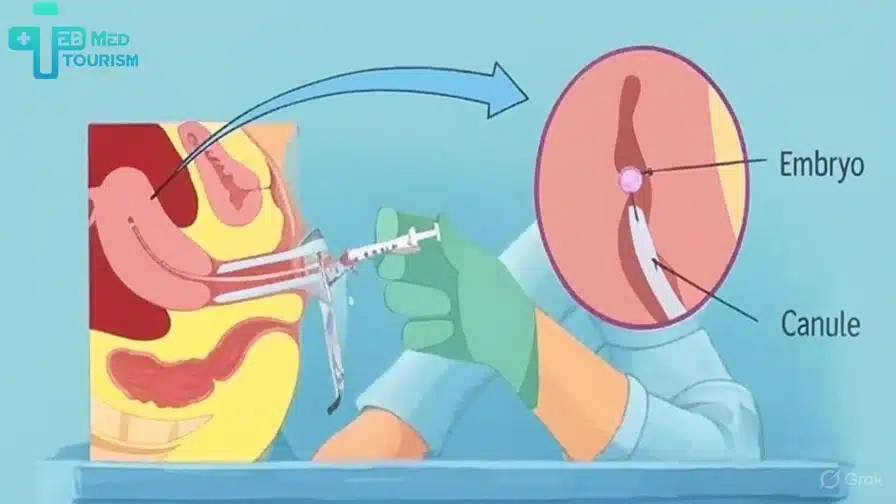
A tiny plastic catheter is carefully inserted into the uterus through the cervix. After that, the embryo and a tiny amount of fluid are placed within the cavity. When the process is over, you will be free to depart. You can drive right away following the embryo transfer if necessary because no anesthetic is needed.
Hormonal studies pregnancy test
A serum pregnancy test is often performed ten to twelve days after the embryo transfer. In the event that the test is positive, we will advise you to continue taking progesterone and estradiol for a few more weeks and may suggest further blood tests. Progesterone and estradiol are stopped if the pregnancy test is negative, and a period will start in a few days.
Follow-up consultation
A vaginal ultrasound will be performed approximately three weeks after the pregnancy test is positive. At this stage, they can typically count the number of embryos and frequently observe a heartbeat.
Following this developmental milestone, there is little chance of pregnancy loss. You should make an appointment to see your doctor if the procedure doesn’t work. We will go over the process and talk about potential future treatments.
Frozen Embryo Transfer Success Rates
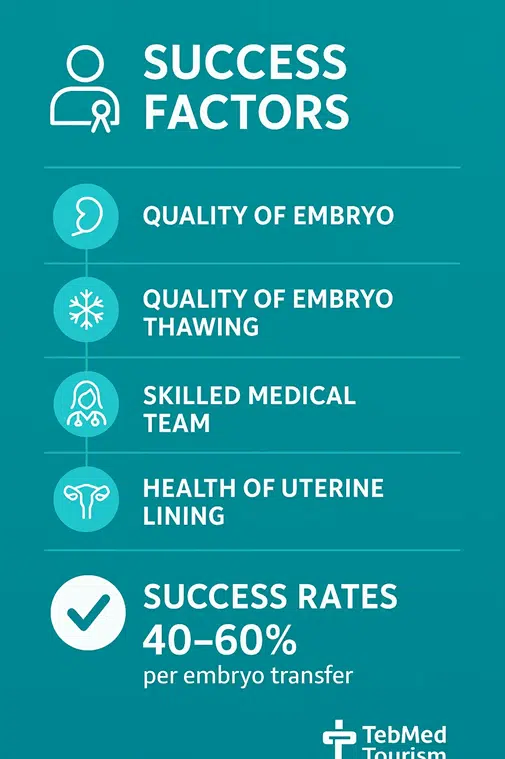
Frozen embryo transfer success rate is generally high, with clinical pregnancy rates of 60%–70% per cycle and live birth rates often higher than those from fresh embryo transfers.
The quality of the embryo, the woman’s age at the time of the initial IVF, and the particular procedures followed by a facility all have a significant impact on the outcome.
For example, a study on chromosomally normal embryos revealed that the initial transfer had an implantation rate of 69.4%, and the rates continued to be high for successive transfers.
If embryos are frozen by “vitrification” at the blastocyst stage (5–6 days following fertilization), the survival probability is over 90%. About 80% of them survive the freezing and thawing process if they are frozen early enough using “slow freezing.”
The success rate of a thawed and transferred embryo that was vitrified at the blastocyst stage is roughly equal to that of a fresh embryo. There is no proof that thawed and frozen embryos cause more defects or miscarriages.
Frozen Embryo Transfer Tips
Preparing for embryo transfer might help you know what to anticipate and reduce your worry about the procedure. Here are some pointers for getting ready for FET:
1. Have a restful night’s sleep
Getting a good night’s sleep is essential if you want to be well-rested for transfer day. Avoid coffee right before bed and keep your room at a comfortable temperature. To help you fall asleep, try a fan, a white noise machine, or diffusing some lavender oil. Sleep may affect reproductive treatments, especially IVF, according to research.
2. Take a full bladder to your visit.
It can be recommended that you consume 32 to 48 ounces of water prior to your arrival. While you wait, this may cause some discomfort, but it’s necessary to ensure that your embryo or embryos are positioned optimally within your uterus. A full bladder makes it easier for your doctor to see your uterus during an ultrasound.
3. Foods to consume prior to the transfer of your embryo
Before your embryo transfer, there are no particular foods you should consume. It’s crucial to remember that your body should be in optimal health. According to a study, if you’re under 35 and not overweight, eating a Mediterranean-style diet can improve your chances of IVF success. This comprises:
- Fresh produce
- Fish and chicken are examples of lean proteins.
- Whole grains
- Avocados and other healthy fats
- These foods give your body the nutrition it needs to eat balanced meals and prepare for a possible pregnancy.
After transfer, maintaining a healthy lifestyle and consuming warm foods after embryo transfer—such as soups, herbal teas, and easily digestible grains—can help improve uterine circulation and overall comfort during the two-week wait.
4. Foods to avoid before to embryo transfer
There are certain items you should avoid in the lead-up to your treatment so that your body is at its best to sustain a pregnancy. Among them are:
- Highly processed foods, including those with artificial sweeteners, added colors and tastes, and high fructose corn syrup
- Foods high in salt include canned meats, bacon, frozen dinners, and pizza.
- White bread, sweets, cereals, and crackers are examples of refined grains.
- Red meats, including pork and beef
- Coffee
5. Medications that might affect the procedure
The procedure of embryo transfer may be impacted by certain over-the-counter (OTC) drugs. Ibuprofen and naproxen are examples of nonsteroidal anti-inflammatory medicines (NSAIDs) that may interfere with embryo implantation and raise the risk of miscarriage.
Discuss any prescription or over-the-counter medications you take with your doctor. During the transfer procedure, some medications—including supplements—might not be advised.
6. Avoiding chemicals
Endocrine-disrupting chemicals (EDCs) can be found in some household goods. These substances can throw off your body’s hormone balance and have been linked to respiratory problems, diabetes, some types of cancer, and problems with reproduction. Typical EDCs include the following:
- Plastics contain phthalates, phenols, and bisphenol A (BPA).
- Electronics include brominated flame retardants.
- Tampons and other female hygiene items contain dioxins.
- Sunscreen and personal care products contain parabens.
- Antibacterial soaps involving triclosan.
How much does frozen embryo transfer cost?
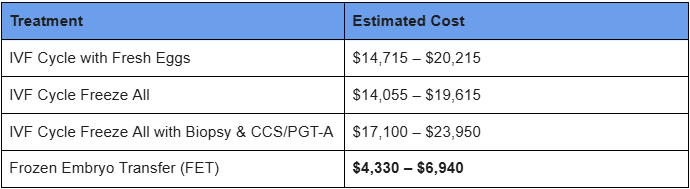
The frozen embryo transfer cost varies widely by country and clinic. On average, the frozen embryo transfer price in Western countries ranges between $3,000–$6,500 USD, while the frozen embryo transfer price in Iran typically ranges from $800 to $1,500 USD, depending on the facility, treatment plan, and included services.
TebMedTourism offers patients who seek fertility treatment abroad an excellent, cost-effective substitute for the typical frozen embryo transfer cost of $3,000–$6,500 USD in the US or $2,500–$3,300 CAD in Canada.
This medical facilitator and provider delivers all-inclusive packages that include medical treatment, accommodation, and translation services for foreign patients to ensure they experience an enjoyable and comfortable fertility journey.
Conclusion
Frozen Embryo Transfer (FET) is a highly effective and scientifically advanced procedure that offers hopeful parents an excellent opportunity to achieve pregnancy through assisted reproductive technology.
TebMedTourism is a reputable international healthcare provider for patients looking for high-quality, reasonably priced fertility treatment and IVF in Iran. We combine skilled medical teams, modern IVF laboratories, and customized treatment packages that include lodging, transportation, and translation services to provide top-notch fertility services at a fraction of the price of Western countries.