





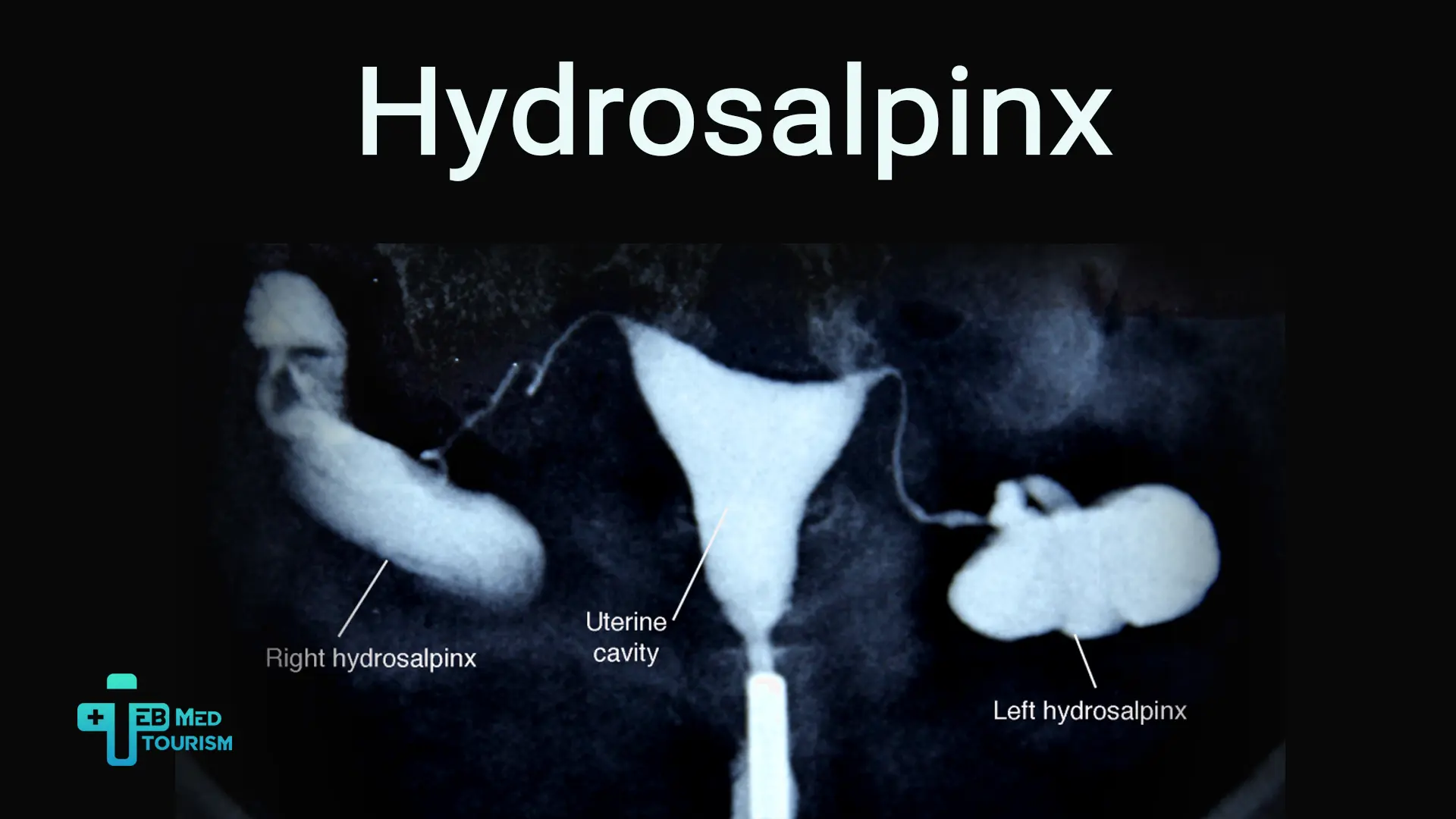
You may have trouble getting pregnant if you have a hydrosalpinx, which is a blockage of fluid in your fallopian tubes. A hydrosalpinx happens when your fallopian tubes are damaged, usually as a result of an untreated infection. One treatment option is to remove the tubes (salpingectomy) or drain and repair them. After treating a hydrosalpinx, many individuals and couples who wish to become parents choose to use IVF.
Endometriosis adhesions, prior pelvic surgeries, and pelvic infections like chlamydia are common causes of hydrosalpinx. While some women may have pelvic pain or unusual discharge, many women only have trouble getting pregnant.
IVF is an option if fertility cannot be restored. Imaging tests such as a hysterosalpingogram (HSG), ultrasound, or laparoscopy are typically used to make the diagnosis. Treatment usually consists of minimally invasive surgery to remove or repair the damaged tube.
What is hydrosalpinx?
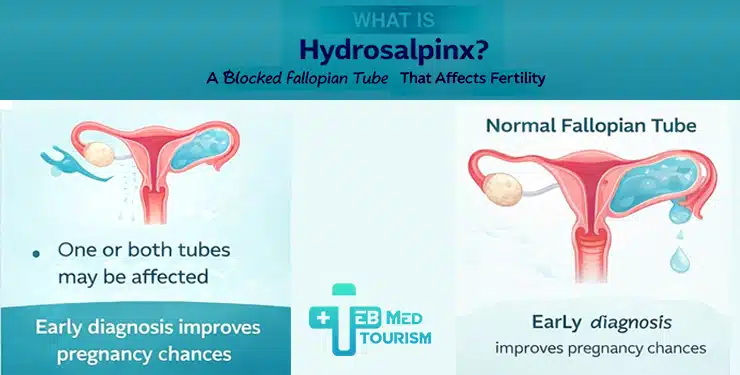
A blockage caused by fluid buildup in one or both fallopian tubes is known as hydrosalpinx or blockage of the fallopian tubes. To define hydrosalpinx in simple terms, it is a fluid-filled, blocked fallopian tube that interferes with normal fertility and is considered one of the important infertility causes.
Your ovaries and uterus are connected by fallopian tubes. Your ovaries produce an egg that passes through your fallopian tubes once a month as part of your menstrual cycle.
An open pathway for the union of an egg and a sperm (fertilization) is provided by healthy fallopian tubes. The embryo, also known as the fertilized egg, enters your uterus through the same open passageway. A fetus can then develop from an embryo that implants in your uterine wall.
Fluid buildup obstructs this passageway in a hydrosalpinx. Sperm may not be able to reach your egg if your fallopian tube is blocked. Your fallopian tube blockage may keep the embryo from entering your uterus even if fertilization does take place.
What are the signs and symptoms of a hydrosalpinx?
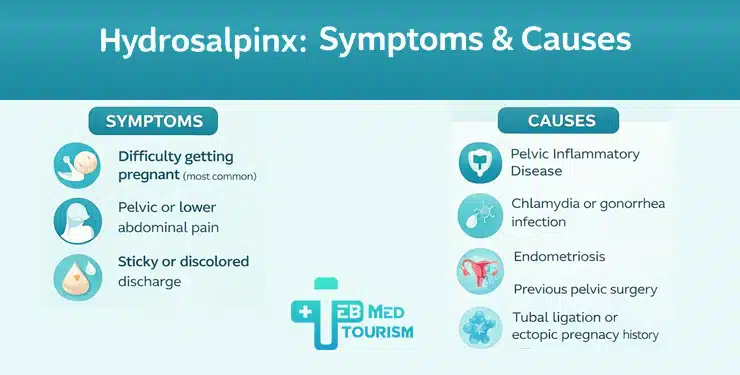
Symptoms of a hydrosalpinx are very uncommon. You may not realize that your tubes are blocked until your doctor looks into the cause of your infertility. So, other than the inability to conceive, most women don’t experience any symptoms.
Others might have a sticky or discolored vaginal discharge, or they might feel pain in their lower abdomen or pelvis. The presence of hydrosalpinx is indicated by an ectopic pregnancy.
Sticky and/or discolored vaginal discharge is a common symptom, as is pelvic pain that may worsen during or immediately after your period.

Types of hydrosalpinx
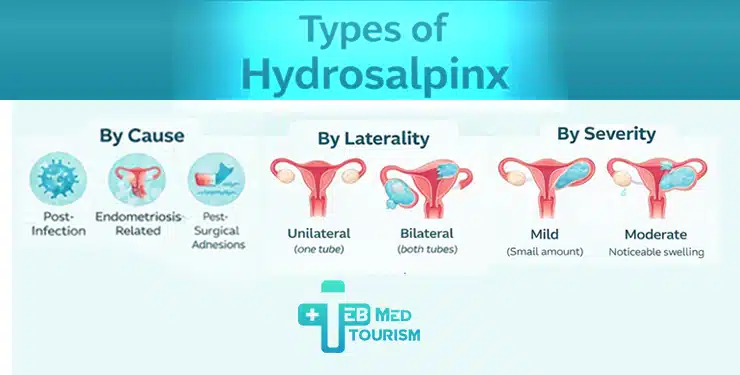
Depending on its severity, location, and underlying cause, hydrosalpinx (fluid-filled fallopian tube) can be categorized in several ways. The primary categories, according to the physicians, are as follows.
1. Based on Laterality
Unilateral hydrosalpinx – In this type of hydrosalpinx, only one fallopian tube is blocked and filled with fluid (right or left). Fertility may still be possible with the other tube.
Bilateral hydrosalpinx – In this type, which has a greater impact on fertility, both tubes are affected and it often requires assisted reproductive treatment. This condition may also be described clinically as bilateral hydrosalpinges in imaging reports.
2. Based on Severity / Extend of Tube Damage
Mild hydrosalpinx – In this condition, there is a small amount of fluid, while tube walls may still have some function. This type is sometimes harder to detect on imaging.
Moderate hydrosalpinx – In this type, there is noticeable dilation (swelling) of the tube while there is reduced function of inner lining (cilia).
Severe hydrosalpinx – In this condition, the tube is significantly enlarged and often permanently damaged, and it is usually associated with long-standing infection or inflammation.
3. Based on Cause
Post-infectious hydrosalpinx – This condition is the most common, and it often follows pelvic inflammatory disease (PID) from infections like chlamydia or gonorrhea, which are a major cause of hydrosalpinx.
Endometriosis-related hydrosalpinx – It is caused by scar tissue from endometriosis.
Post-surgical adhesions – Scar tissue after abdominal or pelvic surgery.
What causes a hydrosalpinx?
The fallopian tubes are prone to damage or blockage because of their small size. Infection-induced scarring on the fallopian tube walls is the most frequent cause of blockage or damage to the tubes.
In addition to infection, which can result from a number of factors, diseases or surgical damage can obstruct tubes. The following are the more common reasons for tubal occlusion.
1. Pelvic inflammatory disease (PID)
Another possible explanation and cause of hydrosalpinx is prior pelvic surgery, specifically on the fallopian tubes. Sexually transmitted infections (STDs) or other infections can lead to PID if they are not treated. Usually chlamydia or gonorrhea are to blame. Inflammation caused by PID close to the fallopian tubes can result in blockages and scar tissue formation.
2. Endometriosis
When tissue from the uterine lining known as the endometrium starts to proliferate on other pelvic organs outside of the uterus, it is known as endometriosis. A woman’s endometrium usually sheds and flows out of her body during her menstrual cycle.
Nevertheless, unlike normal tissue, the endometrium tissue growing outside the uterus does not shed.
This can result in the formation of scar tissue and induce inflammation. Tubal infertility can result from endometriosis that grows on or near the fallopian tubes, which can block or scar the tubes.
3. Surgery
Fallopian tube damage or blockage may also result from previous surgeries. Specifically, scarring from abdominal surgery for conditions like endometriosis or uterine fibroids may impair an egg’s capacity to pass through the fallopian tubes.
4. Ectopic pregnancy
The implantation of a fertilized egg in the fallopian tubes instead of the uterus is known as an ectopic pregnancy. The fertilized egg lacks the space necessary to grow because fallopian tubes are tiny and slender.
A rupture of the fallopian tubes could result from this, making the woman infertile and potentially fatal. The fertilized egg may be removed surgically if a physician detects an ectopic pregnancy prior to the fallopian tube rupturing. Surgery can lead to fallopian tube scarring and sometimes removal.
5. Tubal ligation
In order to avoid getting pregnant again, a woman may choose to have the ends of her fallopian tubes cut or blocked through an elective procedure called tubal ligation. Having your tubes tied is another term for this process. In certain situations tubal ligation can be reversed, but more surgery is needed.
How does hydrosalpinx affect my body?
It is possible for a fallopian tube to become swollen and filled with fluid when the end portion is damaged or blocked; this condition is known as a hydrosalpinx (or adnexal hydrosalpinx when seen near the ovary). With hydrosalpinx the tube may become seriously damaged and malfunction, making a typical pregnancy in the uterus impossible.
One potentially fatal condition is an ectopic pregnancy, which develops in the tube. A pregnancy cannot implant into the uterus if the tube is blocked because secretions that build up there could backflow into the uterus.
How to diagnose hydrosalpinx?
Hydrosalpinx is usually diagnosed through a combination of clinical history, imaging tests, and sometimes surgical evaluation. A physical examination, imaging studies, and a review of medical history are usually used to diagnose hydrosalpinx.
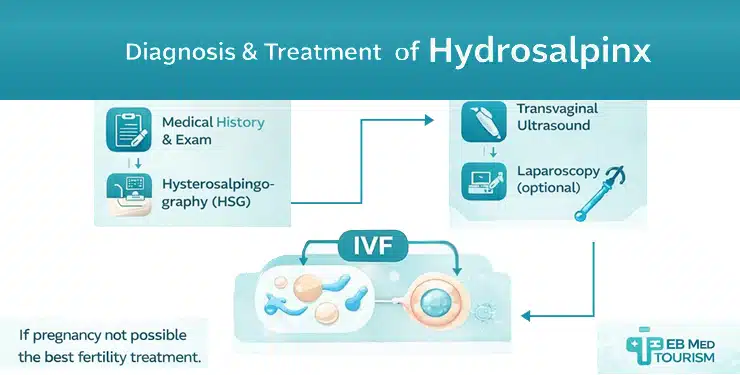
Hysterosalpingography (HSG)
Sperm cannot get to your egg, or the fertilized egg cannot enter your uterus if your fallopian tubes are blocked. In order to identify blockages, a contrast dye is injected into the uterus and fallopian tubes during a hysterosalpingography (HSG) X-ray procedure. This test is commonly discussed in relation to HSG hydrosalpinx findings in fertility evaluations.
This method of evaluating the fallopian tube involves inserting a thin catheter through the cervix and uterus to inject a dye that shows the fallopian tubes’ outline.
Transvaginal Ultrasound
Physicians can determine whether the fallopian tubes are blocked by examining a series of X-ray images that show the tubes filling.This imaging method aids in identifying any fallopian tubes that are filled with fluid and aids in visualizing the reproductive organs.
An ultrasound imaging test may also allow doctors to see that the fallopian tube is enlarged. In some reports, this may again be documented as bilateral hydrosalpinges when both tubes are affected.
laparoscopy (Surgery)
Through laparoscopy surgery, which involves inserting a tiny tube with a camera through tiny abdominal incisions, the surgeon can apply dye that can reveal whether hydrosalpinx has blocked the fallopian tube.
How is hydrosalpinx treated?
Your chances of getting pregnant can be increased by treating a hydrosalpinx. The degree of your blockage and your age are two examples of the variables that will affect your treatment.
Antibiotics for hydrosalpinx may be prescribed by your healthcare provider to treat any active infections, and the best antibiotics for hydrosalpinx depend on the underlying bacteria and clinical history. These are also surgical and nonsurgical treatments for hydrosalpinx as follows:
Hydrosalpinx treatment and surgery
When a blockage in the fallopian tubes causes fluid to accumulate, a doctor will typically perform a salpingectomy or a salpingostomy to treat hydrosalpinx. During a salpingectomy, a portion of the obstructed fallopian tube is removed by the physician.
This process increases the chances of getting pregnant with IVF more than other potential surgical procedures, including options such as IVF in Iran for international patients seeking affordable fertility care.
A physician makes a new incision in the fallopian tube close to the ovary during a salpingostomy. The fallopian tubes can then receive eggs from the ovaries via the newly created aperture. Sometimes this new opening will develop scar tissue over time, creating a new obstruction.
Fimbrioplasty is a variant of salpingostomy that entails making a new incision and repairing the fimbriae or tissue close to the ovaries. Depending on where the obstruction is located, doctors may advise either course of action.
These surgeries usually involve a hospital stay of two to three days and a recuperation period of four to six weeks. The growth of new fallopian tube scar tissue and an elevated risk of an ectopic pregnancy and surgical complications like blood loss, pain, and organ or tissue damage are among the risks associated with the procedures.
Tubal cannulation
Blockages in the fallopian tubes, particularly those nearest to the uterus, can be treated nonsurgically with tubal cannulation. A physician passes a catheter through the uterus and vagina until it reaches the obstruction during this procedure.
During the procedure the doctor uses ultrasound or X-rays to pinpoint the precise location of the blockage. The blockage will then be removed by the doctor using a thin wire or by inflating a tiny balloon. The risks and recovery time from tubal cannulation are low. Among the risks are infection and rupturing the wall of the fallopian tube.
Tubal ligation reversal
In tubal ligation reversal, blockages in the fallopian tubes that were added or implanted during a previous tubal ligation procedure are surgically removed by a doctor. A doctor can often reverse a tubal ligation by removing the obstructed fallopian tube segments and reattaching the two ends of each tube in a procedure called tubal reanastomosis.
A doctor will assess the woman’s suitability for tubal ligation reversal before scheduling the procedure. The best chance of getting pregnant naturally after reversing a tubal ligation is for women who had the procedure done with tubal rings or clips.
There is a two-week recovery period following what is regarded as an abdominal surgery. Tubal ligation reversal carries risks of infection, bleeding, scarring, and an elevated risk of ectopic pregnancy.
How do you get rid of hydrosalpinx naturally?
There are sadly no natural remedies for hydrosalpinx. Physical issues that the body typically cannot handle on its own include fluid buildup and tubule damage. It is necessary to use medical therapy such as antibiotics for hydrosalpinx rather than home remedies even when infections are suspected.
If your tubes are just slightly damaged, your doctor may be able to repair them with a salpingostomy. If the hydrosalpinx is more severe, you may need to have one or both of your fallopian tubes removed.
Though they don’t take the place of medical care, certain supportive measures can help lower inflammation and promote reproductive health.
1. Anti-inflammatory lifestyle
Consume a balanced diet with an emphasis on foods that reduce inflammation, such as fruits, vegetables, nuts, seeds, and fish high in omega-3 fatty acids (like salmon). Avoid processed foods, refined sugar, and trans fats. Omega-3 supplements, ginger, and turmeric (curcumin) are a few examples of herbs and supplements that may help lower inflammation.
2. Infection control
In the event that an infection is the cause of hydrosalpinx, antibiotic treatment is essential. The best antibiotics for hydrosalpinx will be determined by your physician based on test results. Fallopian tube bacterial infections cannot be cured by natural means.
3. Pelvic health
Gentle exercise and stress-reduction techniques like yoga and meditation can enhance blood flow and hormonal balance. Additionally, abstain from smoking and binge drinking, as these behaviors can hinder fertility and healing.
4. Fertility considerations
Because the fluid may prevent sperm from reaching the egg, hydrosalpinx frequently affects fertility. Tubal patency cannot be restored by natural means. IVF, which completely avoids the tubes or surgical tube removal or repair, is a medical option, and in some cases additional approaches such as egg donation in Iran or sperm donation in Iran may be recommended depending on individual fertility factors.
What happens if hydrosalpinx is left untreated?
If you don’t treat hydrosalpinx, it may lead to long-term fertility problems, higher miscarriage risk, or complications like ectopic pregnancy. If it has no symptoms and you are not trying to conceive, some doctors may take a watch-and-wait approach.
It doesn’t always cause complications—but when fertility is the goal, early diagnosis and personalized treatment can make a meaningful difference.
Is pregnancy possible with hydrosalpinx?
If the tube or tubes are severely damaged, you will need treatment that does not use the tubes to help you conceive, such as in vitro fertilization (IVF). In this process your sperm and egg are joined (fertilized) in a lab.
The fertilized eggs or embryos are then inserted into your womb by the doctor. Since hydrosalpinx may reduce your chances of becoming pregnant, your doctor might advise that it be removed or separated from the womb before you begin IVF treatment. In complex cases where pregnancy is not possible, options like surrogacy in Iran may also be considered.
When trying to conceive, knowing you have a hydrosalpinx can be a discouraging setback, but many patients who receive treatment are able to conceive in a healthy manner.
Conclusion
Hydrosalpinx is a challenging condition, particularly for women who are trying to conceive, but thanks to new treatments and improved diagnostic techniques, there is hope once more.
Early evaluation and individualized treatment are essential to enhancing fertility outcomes and reducing the likelihood of complications. With the right medical support, such as minimally invasive surgery and assisted reproductive methods like IVF, many women can have healthy pregnancies.