





IUI is a more natural but less effective method of treatment since it gives the body more autonomy than IVF and is one of the most common forms of artificial insemination in humans.
The best sperm are chosen for intrauterine insemination and inserted into the uterus, where they are allowed to naturally fertilize the eggs. IVF involves removing the eggs from the body and fertilizing them in a lab.
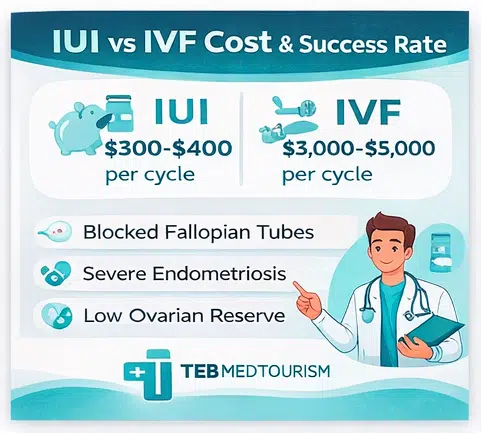
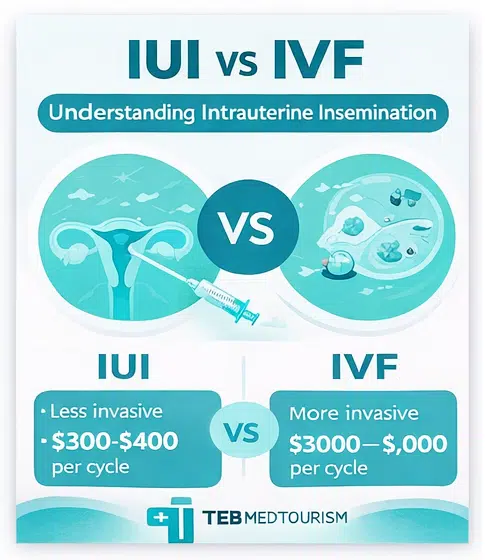
This suggests that IUI is a less invasive method that uses less medication than IVF. Additionally, one cycle of IUI is usually a fraction of the cost of one cycle of IVF, making it significantly less expensive.
But intrauterine insemination is not as successful as IVF. Once you inject the sperm, you’re letting the body’s natural processes take control, unlike IVF, where you can confirm that the egg has fertilized and select the best embryo or embryos to send back into the womb.These differences strongly influence IUI vs. IVF success rates. IUI success rates are typically about one-third of IVF success rates.
What is IUI?
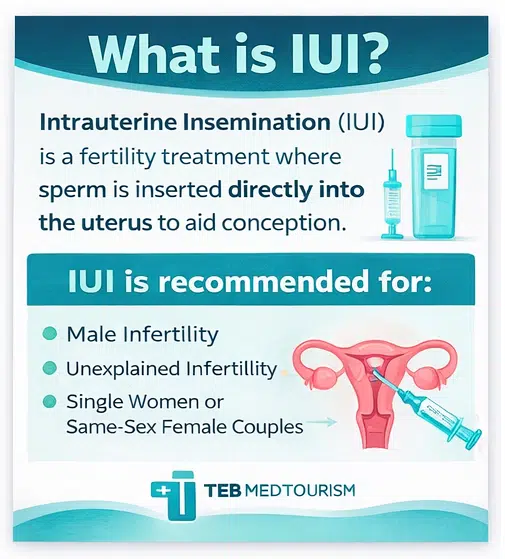
Intrauterine insemination, or IUI, is a fertility procedure and a major form of artificial insemination in humans in which sperm is inserted directly into the womb. This procedure is commonly offered in Infertility treatment in iran programs.
Fertility medications aid in the production of eggs. The most motile sperm will be used for insemination just before ovulation.
Donor insemination (DI) is the process of utilizing sperm from a donor. It is done in cases where the spouse has an extremely low sperm count, no sperm at all, or a genetic condition.
Why is intrauterine insemination performed?
For fertile female couples or single women who require donor sperm, IUI may be a reasonable first option with relatively low IUI cost, especially in cases related to male infertility.
Additional justifications for selecting IUI include:
- If you have trouble ovulating, intrauterine insemination can help you generate more eggs by working with fertility medications.
- If your infertility is unexplained. The fallopian tubes must be open, healthy, and free of obstructions for IUI to be successful. Additionally, there must be an adequate supply of motile, healthy sperm. If not, IVF could be a better option for therapy.
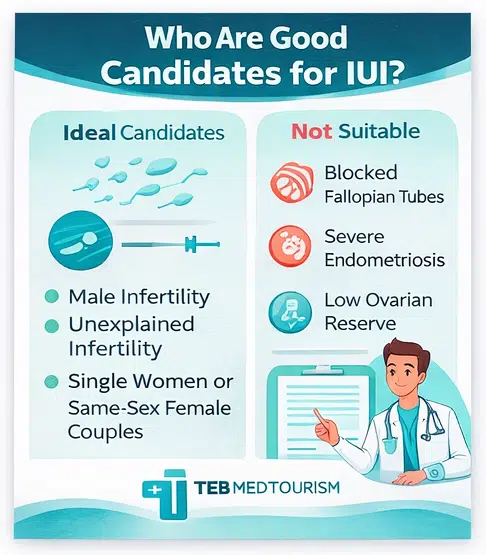
Who are good candidates for IUI?
It’s important to realize that IUI is neither less expensive nor less intrusive than IVF in all cases. Understanding intrauterine insemination effects and underlying Infertility causes helps determine whether this method is suitable.
If you have male factor infertility, low-quality eggs, blocked fallopian tubes, severe endometriosis, or limited ovarian reserve, IUI will not be effective for you. If you are over 40 or in your late 30s, IVF might be advised even if IUI is a good option for you. As women age, both the number of eggs available and your odds of success with intrauterine insemination often decrease.
Important tips for preparing for IUI
IUI success depends on many factors, including lifestyle habits that may influence IUI effects and overall fertility.
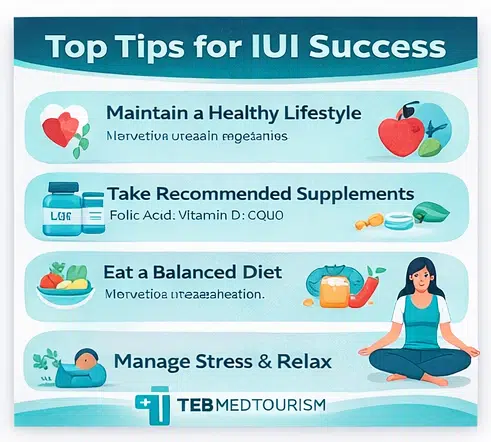
- Maintain a healthy lifestyle: It is crucial to follow a healthy diet and to take suitable supplements both prior to and following IUI treatment. It is generally recommended to start taking supplements like folic acid, vitamin D, and CoQ10 before intrauterine insemination and to maintain their use throughout any possible pregnancy.
To effectively prepare your body for pregnancy, it is crucial to uphold a balanced diet that incorporates a diverse range of fruits and vegetables, lean proteins, healthy fats, and whole grains. It is advisable to consume a meal before the IUI procedure to ensure that you are adequately nourished and energized on the day of the treatment. - Relax and control your stress: During the IUI process, your physician might recommend medications aimed at stimulating your ovaries to produce eggs.
- Eat a healthy diet: Maintaining a nutritious diet and taking suitable supplements is crucial both prior to and following an IUI procedure. Recommended supplements, including folic acid, vitamin D, and CoQ10, are typically initiated before the intrauterine insemination and should be consistently taken throughout any possible pregnancy.
Does intrauterine insemination work?
Like with any fertility treatment, a woman’s chances of becoming pregnant increase with age. Additionally, taking fertility medications to boost your natural cycle increases your chances of becoming pregnant.
When calculating treatment costs, it’s important to keep in mind IUI cost and the possibility of multiple treatment cycles.
If there are no evident issues with your fertility, your doctor could advise you to try again because many people require multiple cycles of IUI before becoming pregnant. If you want to, you can try again right away, although some people would rather take a pause.
IUI procedure step by step
This procedure describes a single IUI cycle and its potential intrauterine insemination effects on fertility outcomes. Depending on your medical history and what your clinic determines is appropriate for you, you might be prescribed different medications or have a somewhat different course of treatment.
Initial consultation and baseline tests
Your fertility expert will give you a comprehensive, openly structured treatment plan and explain your specific course of IUI fertility treatment.
It must be clear that IUI is suitable for you. This entails using an ovulation prediction kit to test for ovulation at home over a few cycles before starting treatment so we can determine whether you are ovulating or will require fertility medication.
It will be determined whether you require a fallopian tube test and evaluate your risk of tubal issues. It is highly recommended to get some fertility tests if you’ve been trying to conceive for a while without success or if you’re thinking about postponing motherhood.
A fertility assessment can be an anxious initial step in your reproductive path, regardless of your motivations. We, at TebMedTourism, are here to give you the knowledge, comfort, and professional guidance you require to make wise choices for your future. You can contact us and get free consultation through WhatsApp.

Hormonal blood tests and baseline ultrasound
The number of follicles (and thus the number of eggs) that develop will determine your likelihood of multiple pregnancies. Your use of fertility medications will have an impact on this.
It’s essential to get scans if you’re on fertility medications to see how many follicles are growing. If too many are, your treatment should be discontinued. You should talk about this with your clinic.
Ovarian stimulation (if needed, with medication)
By putting more eggs and sperm closer together and avoiding cervical mucus, ovarian stimulation in intrauterine insemination procedures increases the likelihood of conception by using fertility drugs to stimulate the ovaries to create numerous eggs for release.
Gonadotropins and clomiphene citrate are among the medications utilized, which are tracked by ultrasound and blood tests.
Follicle monitoring with serial ultrasounds
You should get ultrasound scans if you’re using fertility medications to see how many follicles are growing. Due to the possibility of multiple pregnancies, the cycle will need to be canceled if there are too many.
In addition, IUI is only possible if your fallopian tubes are healthy and open. An x-ray, vaginal ultrasound, or keyhole surgery will be used by your clinic to check this.
Trigger shot (HCG or Ovidrel) for ovulation
A trigger shot is used to time ovulation for insemination. Although it increases success, there is a small chance of multiple pregnancies, which is usually controlled by restricting follicle growth.
Sperm preparation (washing and processing)
Sperm is prepared and washed. The technique of separating sperm from seminal fluid is known as sperm washing. Only the most active sperm are left after washing, and any substances or liquids that can obstruct fertilization have been eliminated.
IUI procedure (insemination into the uterus)
A thin catheter is used to carefully insert the cleaned sperm into the uterus. This is a quick, easy, and painless process. The highest quality sperm are chosen and put into your uterus after being washed and prepared.
The entire procedure is comparatively painless and only takes a few minutes.You are free to leave the clinic after intrauterine insemination, however you are allowed to take a short break before returning.
Luteal phase support (progesterone)
After IUI, luteal phase support (LPS) with progesterone is frequently used to increase live birth rates (LBR) by improving endometrial receptivity. However, the benefits of LPS are inconsistent with those of clomiphene citrate (CC) (Clomid) stimulation.
Pregnancy test (usually 14 days later)
A date for your pregnancy test will be provided to you. It makes sense that you would feel excited at this point, but avoid taking the test too soon since the results could be deceptive.
Two weeks later, you can take a pregnancy test. During this period, our midwife will assist you.It is common to require more than one cycle of insemination, even though some women become pregnant immediately using IUI.
What medications are used during IUI?
Fertility medications that encourage your ovaries to create and release as many eggs as possible are frequently used in conjunction with IUI. It’s not always necessary, though. Typical drugs include:
- Clomiphene citrate
- Letrozole
- Human Chorionic Gonadotropin, or hCG.
- Follicle-stimulating hormone, or FSH.
- Prenatal vitamins are advised for every pregnancy.
The usage of fertility medications as part of your intrauterine insemination therapy will be decided by your healthcare professional.
How long is the IUI process from beginning to end?
Monitoring and preparation are essential parts of artificial insemination in humans, including IUI procedures commonly practiced alongside IVF in iran. Medication to increase egg production may be prescribed to the patient.
A sample of semen that has been cleaned and prepared in the lab is provided by the spouse or sperm donor. A tiny catheter is then used to insert the prepared sperm into the uterus. The patient can immediately return to their regular activities after the reasonably quick and painless operation.
It takes about four weeks to complete the IUI therapy. You will visit the clinic two or three times during this four-week period for monitoring. This makes it possible to track the development of eggs and see cycle timing clearly.
How much does IUI cost?
The cost of intrauterine insemination is influenced by a number of factors, including the fertility clinic you visit, your medical history, medication use, and diagnostic tests. It is less expensive than IVF and other infertility treatments.
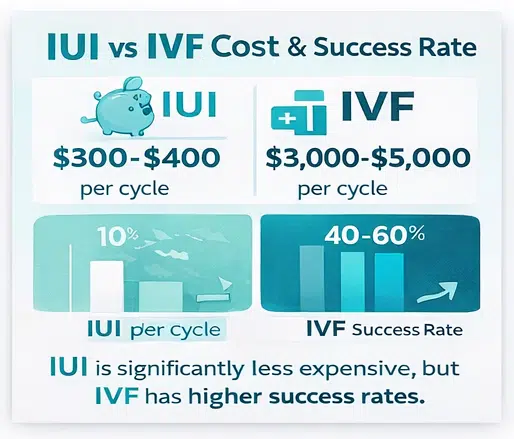
Without insurance, you should budget between $300 and $4,000 for each cycle. Laws in several states mandate that insurance companies pay a portion of the expenses associated with infertility treatment.
What are the risks of intrauterine insemination?
IUI is often an easy and secure process. There is little chance that it will lead to major health issues. Possible risks are part of the overall IUI effects, including infection, spotting, and multiple births.
- Infection: After intrauterine insemination, there is a small risk of infection.
- Multiple births: If you take fertility medicine, you may release multiple eggs. Your chances of getting pregnant with twins, triplets, or more increase as a result.
- Spotting: A tiny tube known as a catheter is inserted into the uterus through the vagina during IUI. After that, the tube is used to inject sperm. Occasionally, spotting—a tiny quantity of vaginal bleeding—occurs during the catheterization procedure. The likelihood of getting pregnant is usually unaffected by this.
- Ovarian Hyperstimulation Syndrome: An uncommon side effect of taking too much fertility medicine is ovarian hyperstimulation syndrome (OHSS). Your ovaries become sore and enlarged due to OHSS.
What are the most common side effects of IUI?
Fertility medications can cause modest negative side effects in certain women. Cramping and spotting are the most typical post-insemination adverse effects.
intrauterine insemination can be physically and psychologically challenging. Depression is a common problem for couples or individuals seeking assisted reproductive technologies due to infertility.
If you’re feeling overwhelmed or disappointed, speak with your healthcare professional so they can guide you through the process.
How effective is IUI in getting pregnant?
IUI success rates are normally between 10% and 20% per cycle, with younger women (under 35) seeing rates at the higher end (10-15%), while rates decline for older women (about 6-7% for over 40).
The majority of pregnancies happen within three to six cycles before chances decline, though cumulative success over several cycles is higher. When comparing treatment options, intrauterine insemination vs. IVF success rates play a major role in decision-making.
What is the success rate of intrauterine insemination?
Age is the most significant factor in influencing the success of IUI, aside from the cause of infertility. To improve your chances of getting pregnant, the majority of medical professionals will advise intrauterine insemination before the age of forty.
A person’s egg production declines with age, as does the quality of those eggs. By age, the IUI pregnancy rate is:
- 20–30 years old: 17.6%
- 31 to 35 years old: 13.3%
- 36–38 years old: 13.4%
- 39–40 years old: 10.6%
Over 40: 5.4%
How can I increase the chances of IUI success?
The success of IUI can be influenced by a number of factors. Among these are the following:
- Age
- If you take fertility medications.
- Medical conditions.
- The cause of your infertility
Together, you and your doctor will decide how to use intrauterine insemination to improve your chances of getting pregnant.
How painful is IUI treatment?
IUI doesn’t require anesthesia, and the process shouldn’t hurt. However, during and immediately following insemination, you might have moderate pains and discomfort.
What is the difference between IVF and IUI
Understanding procedural differences helps explain variations in IUI vs. IVF success rates. In contrast to in vitro fertilization (IVF), intrauterine insemination involves fertilization inside your fallopian tube. Only high-quality sperm remain after a sample of sperm is gathered and cleaned.
During ovulation, a catheter is used to introduce this sample into your uterus. In the hopes that fertilization will occur, this technique makes it easier for the sperm to reach the egg.
In IVF, the sperm and egg are fertilized outside of your body (in a lab) before being implanted as an embryo in your uterus. Compared to IVF, IUI is less costly and invasive. The success rate for intrauterine insemination is decreased per cycle.
IUI vs IVF success rate
IVF is generally more successful, especially for complex cases. Age or the underlying cause of infertility may be to blame for this. While each treatment is superior than the other, one may increase your chances of getting pregnant. Sometimes your doctor will determine that IUI won’t work for you and suggest IVF.
It’s important to take into account a variety of variables, including age, underlying reproductive problems, and the number of treatment cycles, when comparing the success rates of IUI versus IVF. In general, IVF is more successful than IUI, particularly for couples with more complicated reproductive issues.
For same-sex couples with no underlying reproductive problems or couples with mild fertility problems, IUI may still be a good option.
IUI vs IVF cost
Since IUI is less invasive and more economical than IVF, most people will try it before IVF. If the first or second round of intrauterine insemination fertility treatment is successful, the cost may be reduced.
Is IUI better than IVF?
You may be able to conceive with intrauterine insemination (IUI) if you cannot become pregnant by vaginal sex if you are single or in a same-sex relationship; instead, you must use donor sperm. Within six cycles, more over half of women under 40 who use IUI will become pregnant.
Additionally, roughly half of individuals who do not become pregnant during the first six cycles will become pregnant during the next six cycles of IUI.
If you or your partner experience any of the following reproductive issues, intrauterine insemination is unlikely to improve your chances of becoming pregnant:
- Fallopian tubes that are obstructed
- Endometriosis
- Infertility that cannot be explained,
- low sperm count, or low-quality sperm
For those who have difficulty getting pregnant, in vitro fertilization (IVF) treatment is typically advised.
Conclusion
IUI fertility treatment is a common form of artificial insemination in humans that may be effective in certain circumstances. If you have unexplained infertility or ovulatory dysfunction, it’s a good place to start.
Additionally, it works well if your partner has modest male factor infertility. The success percentage of the procedure is influenced by a number of variables, namely your age, diagnosis, and timing.