



Endometriomas are cysts that can develop when endometriosis affects the ovaries. Scar tissue may develop from irritation of the surrounding tissue. Adhesions, which are bands of fibrous tissue, may also develop. These ovarian cysts are often referred to as Endometriosis cyst.
Endometriosis frequently affects the ovaries, fallopian tubes, and pelvic lining. Additionally, it occasionally affects organs like the bowel and bladder. Endometriosis is rarely found outside of the pelvis, such as in the chest. Pelvic endometriosis patches that bleed and break down but are unable to leave your body cause symptoms.
Endometriosis frequently affects the ovaries, fallopian tubes, and pelvic lining. Additionally, it occasionally affects organs like the bowel and bladder. Endometriosis is rarely found outside of the pelvis, such as in the chest. Pelvic endometriosis patches that bleed and break down but are unable to leave your body cause symptoms.
What is endometriosis?
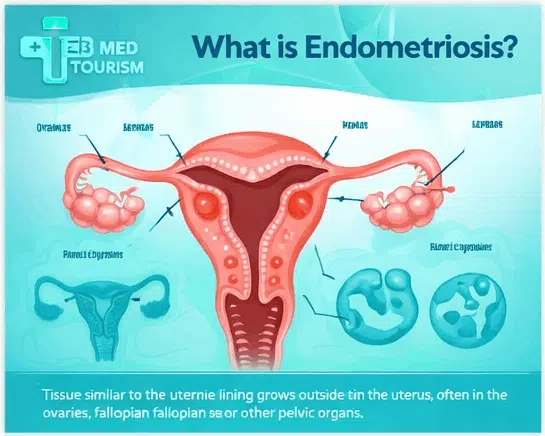
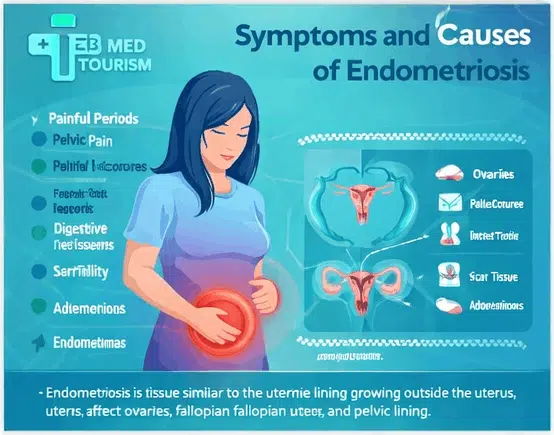
Endometriosis is the growth of cells in other areas of the body that resemble those found in the uterine lining. Though there are treatments that can help, it can have a significant impact on your life. The endometriosis meaning refers to tissue similar to the uterine lining growing outside the uterus.
Tissue resembling the uterine lining grows outside the uterus in endometriosis, a frequently painful condition. The ovaries, fallopian tubes, and pelvic lining tissue are frequently impacted.
Endometriosis growths can occasionally be discovered outside of the pelvic organ region. Similar to the lining of the uterus, endometriosis tissue thickens, degrades, and bleeds with every menstrual cycle. However, it remains inside the body and grows in unsuitable areas.
These may result in organs and pelvic tissues adhering to one another. Particularly during menstruation, endometriosis can be painful. Issues with fertility may also arise, and some patients may eventually need Infertility treatment in Iran or other advanced reproductive options. However, there are treatments that can help you manage the illness and its side effects.
What are the symptoms of endometriosis?
Endometriosis symptoms are various, but the most prevalent one is pelvic pain. Both severe and mild pain are also possible. Pelvic pain is endometriosis’s primary symptom. Menstrual cycles are frequently associated with it.
While many people experience cramping during their periods, endometriosis patients frequently report much more severe menstrual pain. Over time the pain might also get worse.
- Periods with pain. Cramps and pelvic pain can begin prior to the menstrual cycle and continue for several days during it. In addition, you might experience stomach and lower back pain. Painful periods are also known as dysmenorrhea.
- Pain when having sexual intercourse. Endometriosis frequently causes pain during or after intercourse.
- Discomfort during urination or bowel movements. These symptoms are most likely to occur prior to or during your menstrual cycle.
- Excessive bleeding. Periods can be heavy, or you may experience bleeding in between periods.
- Conceiving inability. In certain individuals endometriosis is initially discovered during infertility treatment tests and linked to endometriosis infertility. In such cases, options like IVF in Iran, Egg donation in Iran, or even surrogacy in Iran may be considered depending on the severity of the condition.
- Other signs and symptoms. You might experience nausea, bloating, constipation, diarrhea, or exhaustion. These symptoms are more prevalent prior to or during the menstrual cycle.
Common symptoms of endometriosis include:
- Menstrual cramps that hurt a lot.
- Discomfort in your back or abdomen during or between periods.
- Spotting (light bleeding) in between periods or heavy bleeding during periods.
- Sex-related pain (dyspareunia).
- Endometriosis infertility.
- Urinating or pooping hurts.
- Digestive issues such as bloating, constipation, or diarrhea.
Endometriosis symptoms can also be absent. It can occasionally be present without you realizing it until you are unable to conceive. Your symptoms are unrelated to the severity of the illness.
Even though they have very few endometriosis patches, some people still have excruciating pain. Some people may have multiple endometriosis patches without any pain.
How can symptoms be managed?
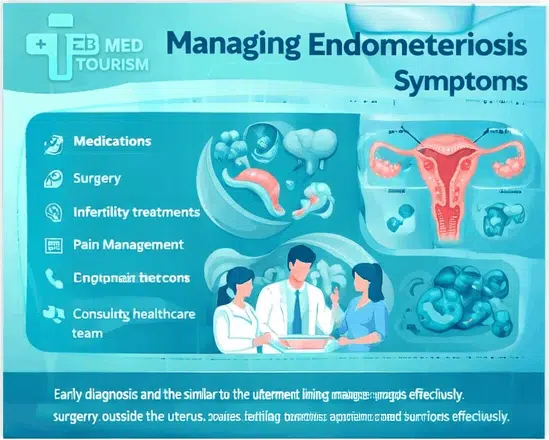
Managing endometriosis can be difficult; however, the sooner the disease is discovered, the better, and you might be in a better position to manage the symptoms.
Learning as much as you can about endometriosis can be helpful in managing the symptoms. When necessary, get a group of medical specialists from various specialties to treat you. If you suspect endometriosis symptoms, consult a member of your healthcare team.
What causes endometriosis?
The endometriosis causes are unknown to medical professionals. Tissue that resembles your uterine lining grows in the wrong places when you have endometriosis. As potential risk factors for endometriosis, researchers are searching for a link between the disorder and ailments like hormone imbalances, immune system disorders, retrograde menstruation, and even other hormonal conditions such as PCOS.

What factors increase the risk of developing endometriosis?
Endometriosis primarily affects women in their 20s to 40s. Younger people may also experience it during their adolescent years. Endometriosis can still be painful and uncomfortable even though many women experience a reduction in its symptoms after menopause.
These are some risk factors that can make you more likely to get endometriosis.
- Endometriosis in the biological family.
- Experiencing menstrual cycles that are short (less than 27 days).
- Having periods that are heavy and prolonged (lasting more than eight days).
- Not having kids.
Is it possible to prevent endometriosis?
Endometriosis cannot be totally prevented. Even though you take every precaution to lower your risk, you may still develop endometriosis. There is nothing you can do to totally reduce your chance of getting endometriosis, like many other medical conditions.
Nevertheless, a number of variables can either raise or lower your chance of getting endometriosis. Although you will have little control over the majority of your endometriosis risk, there is a link between the onset of endometriosis and your body’s estrogen levels.
Although the World Health Organization notes on their webpage about endometriosis that the relationship between estrogen and endometriosis is complex and that the absence of estrogen does not always imply the absence of endometriosis, working with your doctor to maintain healthy estrogen levels can help lower your risk of developing endometriosis.
Ways to prevent or reduce the risk of endometriosis
Think about the following if you want to try to help your body maintain estrogen levels that could lower your risk of endometriosis.
To help control the amount of estrogen in your body, you can take certain medications.
- Discuss this with your doctor: By taking specific approved medications, you may be able to normalize your levels of estrogen if your body is producing too much of it.
- Exercise: Research has shown a correlation between physical activity and the body’s estrogen levels. Your risk of endometriosis may be reduced by regular exercise, which can help to reduce the amount of estrogen in your blood.
- Cut Back on Alcohol: Research has also shown that drinking alcohol can raise the body’s estrogen levels. Alcohol consumption can be decreased or stopped to help control your body’s estrogen levels.
- Avoid Caffeine: Although the effects of caffeine and estrogen levels on the body are somewhat unclear, if you want to reduce your risk of endometriosis, it probably wont hurt to cut back on your caffeine intake. Reducing caffeine consumption shouldn’t be your sole preventative strategy.
What are the complications of endometriosis?
Despite the fact that endometriosis can be treated with medication, this does not increase fertility. After having endometrial-like tissue surgically removed, you might become pregnant.
You might want to think about IVF in Iran or other forms of Infertility treatment in Iran if this doesn’t work for you in order to increase your chances of becoming pregnant. In more complex cases, egg donation in Iran or Surrogacy in Iran may also be recommended. Consult your physician to learn more about your options, such as whether endometriosis will impact when you can start a family.
They might suggest that you start earlier or postpone getting pregnant. Having endometriosis can make it harder to conceive naturally because your symptoms may get worse over time. Both before and during your pregnancy, your doctor will need to perform an evaluation.
Additionally, you may be more susceptible to a number of pregnancy complications if you have endometriosis.
Does endometriosis cause infertility?
Endometriosis is a common cause of infertility. In addition to causing inflammation and scarring, this can occur if endometrial tissue implants around the ovaries or fallopian tubes.
In certain situations, tissue may also grow outside the pelvis and on other organs within it. This endometrial tissue may develop into the uterine muscle in certain individuals, leading to adenomyosis, another type of endometriosis.
Additionally, it has been demonstrated that endometriosis affects the immune system, the hormonal environment surrounding the eggs, the ability of an embryo to implant, and the quality of the eggs. In most cases endometriosis and any scar tissue can be removed, and your symptoms—including your infertility—will get better.
Endometriosis can make pregnancy more challenging. Endomtriosis infertility may affect 30–50% of patients. For those without endometriosis, the monthly chance of becoming pregnant is typically between 10 and 20 percent, whereas for those with endometriosis that has been surgically documented, the chance is only 1 to 10 percent.
The best methods for diagnosing endometriosis
In order to determine whether you have endometriosis, your doctor will probably begin with a physical examination. You will be questioned about your symptoms, such as the location and timing of your pain. Proper endometriosis diagnosis is essential for effective treatment.
Essential tests to diagnose endometriosis
The following tests look for signs of endometriosis and can diagnose it.
- Pelvic exam. With one or two gloved fingers, your healthcare provider feels various parts of your pelvis to look for any odd changes. These alterations may include sore spots, nodules, scars behind the uterus, and cysts on the reproductive organs. Small patches of endometriosis frequently go undetected until a cyst has developed.
- Ultrasound. This test creates images of the inside of the body using sound waves. A transducer is a device that may be applied to the stomach region in order to take pictures. Or in a transvaginal ultrasound variant of the examination, it might be inserted into the vagina. To obtain the best view of the reproductive organs, either type of test may be performed. An endometriosis diagnosis cannot be made with a routine ultrasound. However, it is capable of identifying cysts associated with endometriomas.
- Magnetic resonance imaging (MRI). This test creates images of the body’s organs and tissues using radio waves and a magnetic field. Some find that an MRI aids in surgical planning. It provides your surgeon with comprehensive details regarding the size and location of endometriosis growths.
- Laparoscopy. For this operation you might occasionally be referred to a surgeon. The surgeon can look for endometriosis tissue inside your abdomen with a laparoscopy. You are given medication prior to surgery that reduces pain and induces a sedative state. Then your surgeon inserts a thin viewing device known as a laparoscope after making a tiny incision close to your navel. The location, size, and extent of endometriosis growths can all be determined with a laparoscopy. For additional testing, your surgeon might take a biopsy or sample of tissue. A surgeon can frequently treat endometriosis during a laparoscopy with careful planning requiring just one procedure.
What are common misdiagnoses for endometriosis?
Endometriosis symptoms can be confused with those of a wide range of medical conditions. Other gynecological disorders and conditions affecting other pelvic organs are included in this category. In the following, there are some common conditions that are usually confused with endometriosis.
- Pelvic inflammatory disease (PID): PID is a painful condition that can arise from an infection in your ovaries, fallopian tubes, or uterus. Sexually transmitted infections such as gonorrhea and chlamydia are the most frequent cause of infection. Similar to endometriosis, PID can result in irregular periods, infertility, pelvic pain, and pain during sexual intercourse.
- Irritable bowel syndrome (IBS): IBS is a common intestinal ailment. Because IBS can cause symptoms like diarrhea, constipation, and abdominal pain, endometriosis can be confused with IBS.
- Ovarian cysts: On your ovaries these fluid-filled sacs may develop. Similar to endometriosis, ovarian cysts can result in symptoms like infertility, lower abdominal pain, irregular periods, and altered menstrual flow.
- Adenomyosis: This condition is easily mistaken for endometriosis. People with adenomyosis have endometrial tissue that grows into the uterine wall muscle rather than growing outside of it. Infertility, painful sex, and heavy, painful periods are all signs of adenomyosis, which is comparable to endometriosis.
- Uterine fibroids: These resemble endometriosis. Noncancerous growths called uterine fibroids form around the uterine wall. The majority of uterine fibroids don’t cause any symptoms. If they do experience symptoms, they may also experience frequent urination, pain during sex, and heavy, painful periods—all signs of endometriosis.
- Interstitial cystitis: This condition, sometimes referred to as painful bladder syndrome, can result in lower abdominal pain and fluctuations in the frequency of urination. 8 These symptoms may also be experienced by those who have bladder-related endometriosis.
- Myofascial pain: This is discomfort in the fascia, or connective tissue, surrounding your muscles and other body parts. You might feel pain in your pelvis, particularly in the area of your pelvic floor muscles.
Endometriosis treatment methods
When deciding which treatment is best for you, a fertility specialist will take into account your age, general health, symptoms, and other factors, including your desire to become pregnant.
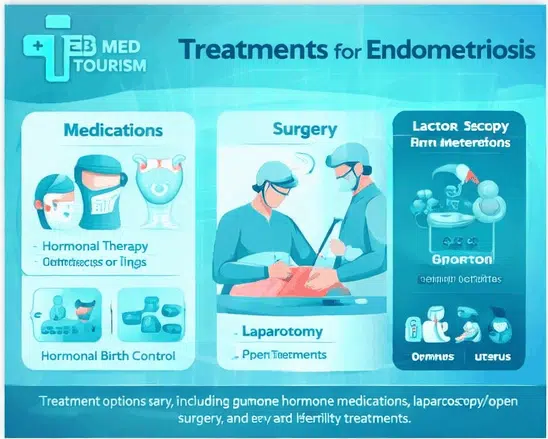
Treatment options include medication, surgery, or both. You might only require pain medication if your symptoms are minor. Using a laparoscope, medical professionals might be able to remove abnormal tissue growths.
Open surgery is occasionally required. The fertility specialist will evaluate every treatment option you have, estimate when you will become pregnant, and guide you through the best symptom management options related to treatment of endometriosis.
Medications for endometriosis
Endometriosis pain can occasionally be reduced or eliminated with hormone medications. Endometriosis tissue thickens, disintegrates, and bleeds as a result of the menstrual cycle’s hormonal fluctuations.
Hormone therapy
Hormones produced in laboratories may inhibit the formation of new tissue and slow the growth of existing tissue. For endometriosis, hormone therapy is not a long-term solution because after you stop treatment, the symptoms may return. Typical medications for treating endometriosis, depending on the goal of use, are:
- Hormonal contraceptives.
The hormones that cause endometriosis can be managed with the use of birth control pills, shots, patches, and vaginal rings. When using hormonal birth control, many people experience lighter and shorter menstrual flows. In certain situations, using hormonal contraceptives may reduce or eliminate pain. If you take birth control pills consistently for a year or longer, your chances of finding relief appear to increase.
- Gonadotropin-releasing hormone (Gn-RH) agonists and antagonists.
These medications reduce estrogen levels and obstruct the menstrual cycle. As a result, endometriosis tissue shrinks. The menopause is artificially induced by these medications. Combining GnRH agonists and antagonists with a modest dosage of estrogen or progestin may help reduce the side effects of menopause. Hot, dry vagina and bone loss are a few of these. When you stop taking the medication, your menstrual cycle and ability to conceive return.
- Progestin therapy.
The hormone is synthesized as progestin which is involved in the menstrual cycle and pregnancy. Menstruation and the development of endometriosis tissue can be stopped by a number of progestin treatments, which may alleviate symptoms. Progestin therapies include birth control shots (Depo-Provera), a progestin-only birth control pill (Camila Slynd), a contraceptive rod inserted beneath the skin of the arm (Nexplanon), and a tiny device inserted into the uterus that releases levonorgestrel (Mirena, Skyla, etc.).
- Aromatase inhibitors.
These drugs are in a class that lowers estrogen levels in the body. In addition to a progestin your doctor may recommend an aromatase inhibitor or a combination birth control pill to treat endometriosis.
- Surgery for endometriosis
When medications are insufficient to manage symptoms or when fertility issues arise, endometriosis surgery is usually considered. Basically, there are three types of surgery as follows:
- Laparoscopy. This treatment the most common procedure and involves removing or ablating endometriosis lesions, removing ovarian cysts, and releasing adhesions (scar tissue) that cause organs to stick to each other.
- Laparotomy. This procedure is used in complicated cases with severe adhesions or widespread disease and requires a larger abdominal incision.
- Hysterectomy. Hysterectomy is regarded as a last resort and involves removing the uterus when other treatments are ineffective for excruciating pain, particularly in women who do not want to maintain their fertility.
Conclusion
Understanding what is endometriosis is essential for recognizing its impact on women’s health. The complex condition known as endometriosis can significantly lower a woman’s quality of life. Common endometriosis symptoms include pelvic pain, infertility, and the growth of endometriosis cyst or endometriomas. To control symptoms and improve fertility outcomes endometriosis must be detected early through precise diagnosis and treated with a customized approach.
By connecting you with leading international endometriosis specialists and hospitals TebMedTourism enables you to receive top-notch care convenient medical travel with free consultations, and all-encompassing support facilitating your ability to take charge of your health and well-being.