



Organ transplant in Iran are widely welcomed by foreigners due to the high success rate of these procedures in the country. A surgical operation known as an organ transplant involves taking an organ from one person and putting it into another whose organ is failing. Your life may be improved or saved with an organ transplant, especially in the context of organ transplant in Iran, where specific regulations apply.
The system of Iran organ donation has gained international attention due to its unique policies. Donors are the individuals who donate organs. The recipient of the organ is the individual who gets it.
Both compensated and cadaveric kidney donations are permitted in Iran. In organ transplant in Iran, prior to a law passed by parliament in April 2000 that authorized the procurement of organs from people who were considered clinically brain dead, donor-compensated transplants accounted for more than 99 percent of all transplants.
Today, organ donation in Iran includes both living and deceased donors under regulated programs.
What Is Organ Donation and Transplantation?
A surgical operation known as an organ transplant involves taking an organ from one person and putting it into another whose organ is failing. This individual might be terminally ill. Your life may be improved or saved with an organ transplant, including through programs of organ transplant in Iran, such as kidney transplant in Iran, which is one of the most common procedures.
Donors are the individuals who donate organs. The recipient of the organ is the individual who gets it.
The procedure of taking a healthy organ from a donor and transferring it to a recipient who has organ failure is known as organ donation and transplantation. This process forms the foundation of organ transplant in Iran as well as in other countries and highlights the importance of organ transplantation in modern medicine.
Two surgeries are performed at roughly the same time: one for the recipient (to obtain the organ) and one for the donor (to remove the organ).
People with life-threatening illnesses or injuries to their organs can have a second chance at life through organ transplantation. However, there is a far greater need for organ donations than there are available.
This shortage is one of the reasons organ transplant in Iran has gained international attention, and patients often compare the organ transplant cost between countries before seeking treatment.
Types of organ donation
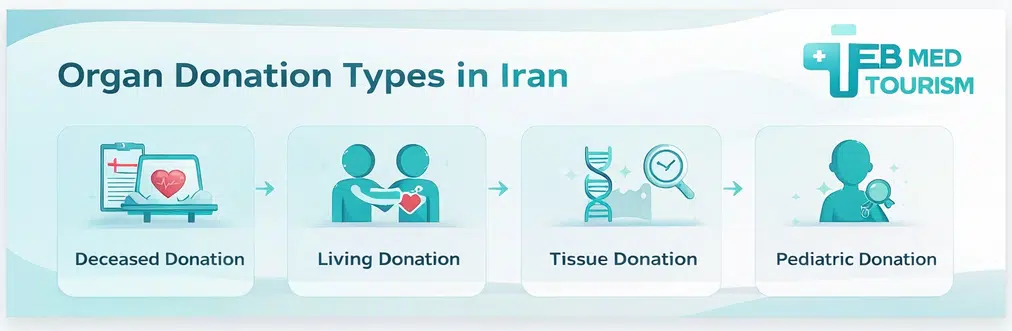
There are typically four types of organ donation including Deceased donation, Living donation, Tissue donation, and Pediatric donation. In the following, we will explain these different types:
Deceased donation
Registering as an organ, eye, or tissue donor allows individuals to contribute to saving lives through deceased donation. This process is also an important part of organ transplant in Iran systems and supports Iran organ donation programs.
Organ donation becomes viable only after all life-saving efforts have failed and brain death is confirmed, with a single donor capable of saving up to eight lives.
Living donation
For many individuals on the organ transplant waiting list, the wait can be uncertain and long. For transplant candidates, living donation provides an alternative and plays a major role in organ transplant in Iran. Living donors can be friends, family, loved ones, or complete strangers who want to witness the results of their selfless donation.
The best part is that recipients of living donor kidney and liver transplants can frequently obtain the highest-quality organ much sooner—in many cases in less than a year. Living donation is also very helpful because over 85% of patients on the waiting list require a kidney and 11% require a liver.
Furthermore, since one in four living donors are not biologically related to the recipient, a living donation is frequently the result of the kindness of a total stranger.
Tissue donation
One popular method of giving life is tissue donation, which includes skin, bone, and heart valves to aid recipients in recovery. Tissue donation can also support certain transplant procedures related to organ transplant in Iran.
A single donor can save 75 lives, benefiting burn victims, athletes with injuries, military personnel, and those needing repairs to musculoskeletal structures. Vascularized composite allografts (VCA) allow the transplantation of multiple structures, with hand and face transplants being common.
Over a million tissue transplant procedures are performed annually in the US, restoring identity and essential function to patients following severe illness or injury.
Pediatric donation
Because of the difficulties involved with children, pediatric donation is regarded as one of the four categories of organ, eye, and tissue donation. Pediatric cases are also considered within organ transplant in Iran programs.The size of the organ is essential to the long-term success of pediatric donation.
Since children tend to react better to organs that are child-sized, this kind of donation is a little different from other organ donations. Approximately 25% of the 2000 children under the age of 18 who are currently waiting for a life-saving organ transplant are younger than five years old.
What organs can be transplanted?
Donating organs and tissues can be the difference between life and death for transplant recipients and their families. By donating organs after death, one person can potentially save up to eight lives.
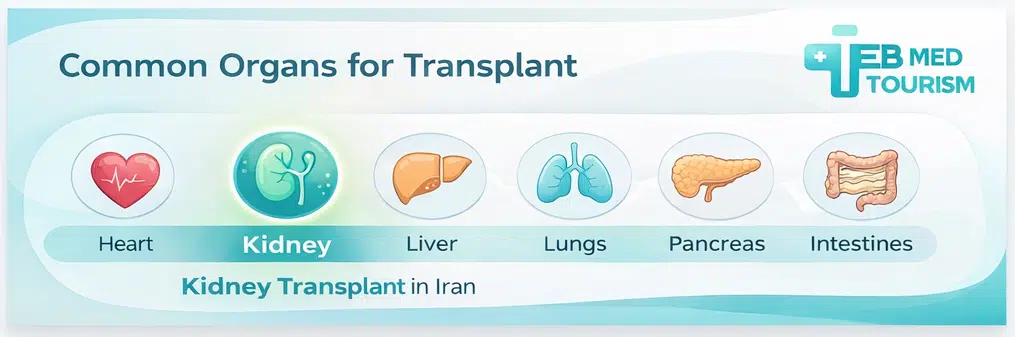
These same organs are involved in organ transplant in Iran, including the heart, intestines, kidneys, liver, lungs, and pancreas. Patients are typically placed on an organ transplant list while waiting for suitable donors.
Heart Transplant
Pumping blood to every part of the body, the heart beats 60–80 times per minute and is the hardest-working muscle in the body. Heart failure, myocarditis, cardiomyopathy, and heart disease are conditions that necessitate a heart transplant.
Kidney Transplant
The most needed and frequently transplanted organ is the kidney. The kidneys are in charge of balancing the body’s fluids and removing waste and extra water from the blood. A kidney transplant may be an option for those receiving dialysis because of high blood pressure, diabetes, or cystic kidney disease.
Liver Transplant
The human liver is known to perform over 500 different tasks, such as storing vitamins, sugars, and fats; breaking down toxic substances in the blood; and producing bile that aids in digestion.
Donating a liver can prevent damage from drugs or alcohol as well as chronic liver infections like hepatitis due to its numerous uses. Sometimes a donated liver is divided between two recipients, meaning that one donor may be able to save the lives of two people.
Lungs Transplant
The lungs are responsible for a vital bodily function: the extraction of oxygen and the expulsion of carbon dioxide. Cystic fibrosis, pulmonary hypertension, emphysema, and pulmonary edema are among the conditions that frequently necessitate lung transplantation. Like the liver, the lungs of one person can save the lives of two others.
Pancreas Transplant
In order to help control insulin, people need their pancreas. Insulin, a hormone produced by the pancreas, aids in the body’s use of glucose (sugar) as fuel and the breakdown of fat, protein, and carbs by digestive enzymes. As diabetes frequently affects both organs, kidney transplants are frequently combined with pancreatic transplants.
Intestines Transplant
The task of breaking down food and reabsorbing nutrients into the bloodstream falls to your intestines. If you have short-gut syndrome or twisted or blocked intestines, you may require an intestinal transplant.
Who can be an organ donor?
In Australia the Australian Organ Donor Register (AODR) is open to anyone 16 years of age or older. This enables them to donate their organs after they die (referred to as a deceased donor). After a child passes away, their organs can also be donated. It is their family that makes this decision.
A living donor is someone who donates organs while still living. You may donate a kidney, a portion of your liver, bone, or bone marrow if you are in good health. Similar eligibility principles are applied in organ transplant in Iran. Typically a living donor is a close friend or family member of the transplant recipient. You can also give a tissue or kidney to a stranger.
Discuss your decision with your family if you decide to donate your organs. Your family will be asked to approve your donation if you pass away. An individual must die in a hospital while still having healthy organs in order to donate them.
Ethical considerations are also discussed within organ transplantation in Islam, which supports donation to save lives under many interpretations.
How do I become an organ donor?
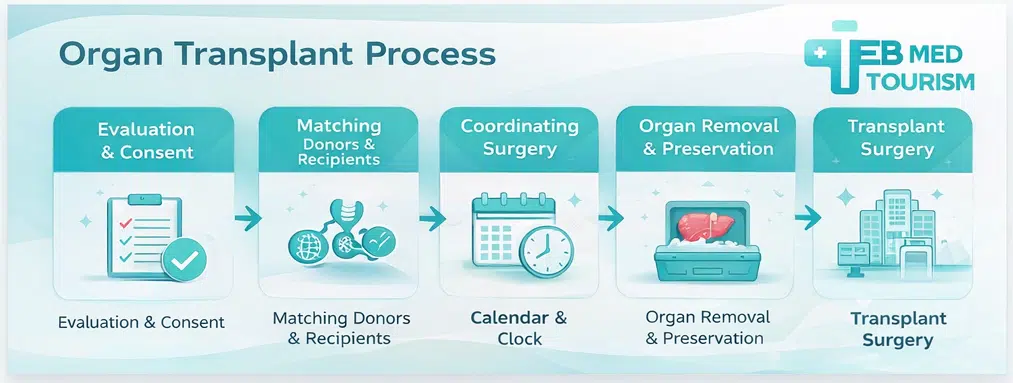
The process of organ donation and transplantation is complicated. The process starts with organ donation and concludes with surgery to transfer an organ from one person to another. This overall pathway is also followed in organ transplant in Iran, with some policy differences.
One kidney or a section of the lung, liver, pancreas, or intestine can be donated by a living donor. The most popular living donation, kidney donation, saves thousands of lives annually.
How does the organ donation process work?
Organ transplantation and donation are difficult procedures. Organ donation is the first step in the process and organ transfer surgery is the last step.
This overall pathway is also followed in organ transplant in Iran, with some policy differences. Historical developments in organ transplant history have made modern procedures safer and more effective.
There are some differences in the procedure depending on whether the donor is living or deceased. The primary distinction is that donations from deceased people typically occur very quickly. After the organ donor passes away, the organs begin to decompose, so the turnaround time is typically several hours.
Planning is more involved when the donor is alive, particularly when it comes to the safety, consent, and medical screening aspects of the transplant procedure.
Finding a donor and getting consent
In the United States, the medical history of the deceased donor is examined by medical professionals from the Organ Procurement and Transplantation Network (OPTN).
Comparable evaluation and consent procedures are used in organ transplant in Iran to ensure safety and compatibility. The waiting process may vary depending on the patient’s position on the organ transplant list.
They locate the recipients of each organ from the organ donor using their national database. They get in touch with the organ recipient’s registered transplant center. Organs are frequently donated by living donors to friends or family.
To make sure they are a match, they have to pass a number of tests and screenings. With this kind, OPTN is less involved. However, they do establish safety guidelines that the majority of transplant facilities adhere to when carrying out a living donor transplant.
Before they pass away, many organ donors make the decision to donate their organs. An organ donor registration database is kept up to date nationwide by the OPTN. They verify the consent of the deceased organ donor.
If so, their wishes are respected. They ask the departed donor’s family for consent if they didn’t give it prior to death. Living donors voluntarily give their consent.

Matching donors to recipients
Matching donor organs and tissues with recipients is the next stage. The OPTN inputs data into a computer system regarding the donor’s body size, blood type, and available organs and tissues.
The system will search through its recipient database to find the closest match. For a living donor the procedure is different. Compatibility is assessed by the transplant center using various methods, including blood tests. They verify whether you are compatible with an organ recipient.
Coordinating the transplant
After a recipient has been found, an electronic notification offering the donor organ will be sent to their transplant center. The ultimate decision regarding the organ’s acceptance will be made by the transplant team. They will coordinate with the host Organ Procurement Organization (OPO) if they agree.
They will make arrangements for the donor and the recipient to have access to two operating rooms as soon as possible. When it comes to living donors, the transplant center coordinates the surgery schedule with both the donor and the recipient.
Removing and preserving the organs
In a dignified official process, a skilled surgical team retrieves organs and tissues from a deceased donor. According to federal law, this medical team is distinct from the one that provided end-of-life care for the donor.
They will ensure the body of the donor is in a suitable state for the funeral service that they or their family have chosen. The group will transport the organs to the recipients’ transplant hospital after preserving them in designated containers.
With living donors it’s different. They undergo surgery at the transplant center around the same time as the organ recipient. The timing of the surgeries is coordinated by the transplant center.
Organ transplantation
When the donor organ is delivered, the recipient will be waiting at their transplant facility. As soon as possible they will undergo surgery. Surgery for an organ transplant is difficult and may take several hours.
Unless they decide to disclose them, the identities of the donor and the recipient are kept private. The removal and transplant procedures for a living donation and transplant take place at roughly the same time, typically in the same hospital. Advances throughout organ transplant history have improved success rates significantly over time.
Living donors have the option to remain anonymous, but they typically know who will receive their organ.
What are the risks and benefits of organ transplantation in Iran?
Every year organ donation and transplantation save thousands of lives. In organ transplant in Iran, it often provides people with a second chance at life and aids in healing and quality of life restoration. The risk of being an organ donor is minimal. It has no bearing whatsoever on the care you receive either before or after death.
The following are some risks associated with organ donation if you are a living donor.
- Risks associated with surgery, such as bleeding, infection, and anesthesia reactions.
- Risks to one’s emotions in the event that the transplant fails.
- Organ health changes following donation.
Getting an organ transplant carries risks. Organ transplant rejection is the primary one. For the remainder of your life, you take immunosuppressive drugs to avoid this.
However, because these drugs impair your immune system, you are more susceptible to infections. Managing organ transplant rejection is a critical part of post-surgery care, particularly in cases of kidney transplant rejection where long-term monitoring is essential.
The organ transplant cost which varies greatly by nation and procedure type is another financial consideration for patients. Decisions about organ transplantation in Muslim-majority areas such as Iran are frequently influenced by religious viewpoints.
How long does it take to recover from organ transplant surgery?
It can take two to six months to fully recover from organ transplant surgery regardless of whether you are the recipient or a living donor. Your hospital stay could last anywhere from a few days to several weeks.
Recovery expectations are generally similar for patients undergoing organ transplant in Iran and demonstrate the continuing importance of organ transplantation in saving lives worldwide.
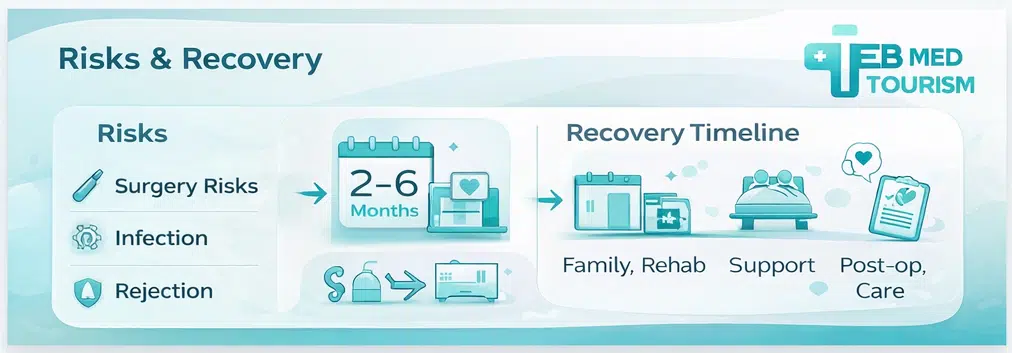
Additionally, you will probably need to take a month or two off from work. During your recuperation some level of discomfort and physical limitations are to be expected. Try to get someone to assist you at home if at all possible. Organ donation in Iran continues to evolve as medical practices improve.
Conclusion
Iran has established a remarkable system that attracts both local and international organ transplant candidates because of its well-structured laws highly qualified medical staff and affordable treatment alternatives. When contemplating transplantation overseas people can make more informed decisions if they are aware of the procedure risks advantages and ethical issues.
From initial free consultations to selecting the best hospital and specialist TebMedTourism can help you with every stage of organ transplantation in Iran or other nations. Additionally, they can assist you with post-treatment support and travel planning. Our mission is to make your medical journey stress-free transparent and safe while offering you top-notch healthcare services.
From initial free consultations to selecting the best hospital and specialist TebMedTourism can help you with every stage of organ transplantation in Iran or other nations. Additionally, they can assist you with post-treatment support and travel planning. Our mission is to make your medical journey stress-free transparent and safe while offering you top-notch healthcare services.