





International surrogacy arrangements are the most important consideration in choosing the ultimate destination for having a child through this method. A surrogacy agreement is a social mechanism designed to meet the needs of a woman who cannot carry a pregnancy to term or of a couple who are unable to conceive. A couple can now arrange with a woman who is willing to conceive carry the child to term and then give up parental rights through the use of in vitro fertilization and artificial insemination.
This woman is referred to as the contract or surrogate mother. Typically the contracting fathers sperm is used in surrogacy agreements. The benefit of having a genetically related child is this.
In international surrogacy arrangements, woman (the surrogate) consents to bear and give birth to a child on behalf of another individual or couple (the intended or commissioning parent or parents). IVF in which embryos are produced in a lab and inserted into the surrogate is the most popular method of surrogacy. Artificial insemination is used in conventional surrogacy.
What is surrogacy arrangements?
When parents travel to other countries for surrogacy, it is known as International surrogacy arrangements. If you are the sort of parents who want to do surrogacy, make sure you are aware of surrogacy success rate and surrogacy arrangements. This is the most vital procedure that should be taken into account. Surrogacy is the most controversial infertility treatment in the world, especially when it comes to ethical concerns and legislation.

The surrogacy procedure carries place through a designated fertility clinic. Due to the fact that it can raise questions about ethical issues, this procedure is regarded as an illegal act in many countries or is legal under some circumstances.
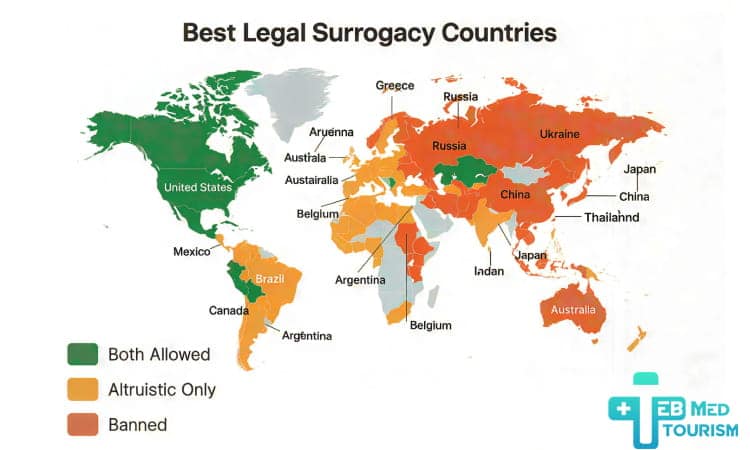
For instance, France, Germany, Italy, and Sweden banned all types of surrogacy, not only commercial but also altruistic ones. On the other hand, Greece and the UK allow altruistic surrogacy. Some countries have minimal legislation. If you want to compare regulations globally, you can review surrogacy laws by country before choosing a destination for international surrogacy arrangements.
Types of surrogacy arrangements
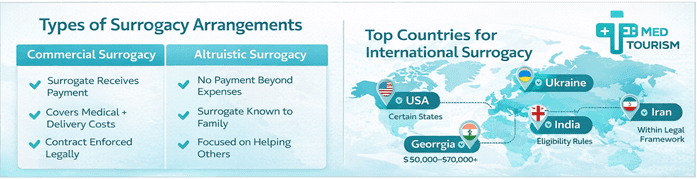
Surrogacy is a journey through which somebody called a surrogate mother carries the child for the intended parents. There are two surrogacy arrangements based on what you want to do within international surrogacy arrangements.
Commercial surrogacy
In Commercial surrogacy, the surrogate mother is paid by the intended parents in order to give birth to the child. It is crucial to say that payment is not limited to medical expenses or delivery.
Compassionate or altruistic arrangement
In this kind of surrogacy, the surrogate is known to the altruistic parent, and an arrangement is between the intended parents and the surrogate without any profit.
Complexities with international surrogacy arrangements
Apart from ethical and legal problems, while international surrogacy arrangements are developing, a significant number of issues show up. Private international law and fundamental rights considered vital in human lives are part of that issues.
These issues include the determination of parentage, the child’s rights, nationality, the right to family life, the merchandising of the human body, and the commodification of the child. For most people finding out about legal acts and the medical system in other countries is not an easy task when planning international surrogacy arrangements.
While commercial surrogacy is legal in some countries, they usually have weak legislative and regulatory frameworks. So, it can be confusing for intended parents. It is good to know as intended parents, you are in charge of any costs and expenses, even for unexpected medical treatments like premature birth, miscarriage and other medical problems related to pregnancy with the surrogate.
Intended parents should consider that every country has special legislation regarding getting out of that country. So before choosing a target country, talk with some experts about Legal countries for surrogacy or the best country for surrogacy for your international surrogacy arrangements situation.
There is a possible chance that these acts are illegal in some countries’ exploitation and trafficking of women for surrogacy. On top of that, the rights of children born through surrogacy might not be met. For example, in some countries, these children do not have a passport or travel documentations.
As a result, they are not able to go to their own country. Alternatively, their nationality is not appropriately registered and causes many problems. Parents must ensure the target country obeys the laws and requirements of the foreigner where they intend to commission international surrogacy arrangements. It can include the documents for entering and getting out of country.
Legal Frameworks Around the World
There are significant differences in surrogacy laws across the globe and many nations have no regulations at all. At the moment, surrogacy is not governed by a single global framework. Each nation has its own set of regulations, as do some states or provinces within a nation.
This has led to the creation of a global map that can be roughly categorized into three groups: those that completely forbid surrogacy, those that only allow altruistic surrogacy (in which the surrogate receives expenses as payment), and those that permit commercial surrogacy with full legal contracts and compensation for international surrogacy arrangements.
Countries often discussed in international programs include surrogacy in USA, surrogacy in Ukraine, surrogacy in India, and surrogacy in Georgia, each with different regulations and eligibility requirements for international surrogacy arrangements.
Altruistic-only countries
Altruistic surrogacy is a necessary component of fertility or surrogacy treatment in a number of nations. A pledge made by both parties to avoid abusing surrogacy laws or regulations under surrogacy acts in selected nations such as Australia, Canada, India, and the United Kingdom is known as altruistic surrogacy.
For actually carrying the baby she is not compensated. This model is preferred in many nations. It emphasizes the gift of lending a hand to another family. Legal requirements frequently place restrictions on the costs that can be reimbursed.
Commercial Surrogacy Permitted (Liberal Commercial Models)
Beyond pregnancy-related and medical costs, intended parents may lawfully compensate a surrogate in certain nations. In these systems surrogate compensation is controlled but allowed, and legal frameworks usually support structured medical supervision, enforceable agreements, and the recognition of parental rights.
Completely Prohibited
In many countries, surrogacy contracts are not legally recognized; clinics are banned from providing surrogacy services; intended parents might encounter legal issues concerning problems regarding their parental rights.
If surrogacy takes place and is carried out in another country, there could be complications with regard to the child’s citizenship and birth registration. with the registration of the birth. These rules are often based on ethical, religious, or governmental concerns regarding reproductive rights, who can be a parent, and/or the risk of exploitation.
Gray Areas or Emerging/Changing Regulations
It refers to the countries where surrogacy laws are unclear inadequate evolving or inconsistently enforced. There may be a lack of comprehensive national legislation or the regulations may be dependent on regional policies court rulings or continuing legislative reforms but surrogacy may still be practiced.
Legal recognition of parentage may not be given automatically in these jurisdictions contracts may not be fully enforceable regulatory frameworks may change quickly and international cases may involve legal ambiguities.
Examples frequently referenced within this category include Japan, where there is an absence of definitive national legislation; medical guidelines impose restrictive measures; Taiwan, where the legislative discussions are currently in progress; Nepal, where the policy orientations have undergone fluctuations; the existing regulatory framework continues to exhibit complexity; and Iran, where surrogacy is practiced and legally endorsed in specific contexts, albeit in the absence of a singular, cohesive statute.
Why overseas surrogacy arrangements are very important?
Due to the fact that the surrogacy process is illegal in many countries, people have a tendency toward going abroad for this procedure. On top of that, in some countries, surrogacy is heavily regulated, and it is not easy to do that. Commercial surrogacy agencies are not legal in these countries.
That’s why Intended parents choose to go to other countries where there is more chance to be parents through surrogacy journey, and local laws are more favorable for international surrogacy arrangements. However, other challenges exist with overseas surrogacy arrangements, such as immigration and international laws.
Some information to know for intended parents
Some intended parents are confused and unaware of what they should do to sign an agreement. In this part, we want to enlighten them about it. The intended parents must look carefully at the laws in the target country; is surrogacy legal in that country?
If it is, are foreigners allowed to do this process there? What are the conditions, and who can sign the surrogacy arrangements? The other important question will come up is the enforceability of surrogacy arrangements.
Who is the legal parent, and what about the baby’s nationality? What is the cost of the process in another country? Is the target country responsible for the travel documents of the baby?
If you are interested to do surrogacy in Iran, we have good news. All of these questions have perfect answer in Iran. Needless to say, surrogacy is completely legal in Iran and every matter is clear in surrogacy arrangement.
Who is the legal parent?
When surrogacy is done in countries where this procedure is legal, a birth certificate will usually be issued with the intended parents’ names as legal and biological parents. However, some other activities should be taken into account. For example, intended parents should be aware of their country’s laws.
Who can become a parent through surrogacy?
Surrogacy journeys in other countries have a lot of difficulties and issues. It raised some questions which should be answered before doing this procedure. Some of these questions are:
Who would be a surrogate mother? Is it approved surrogacy by single persons or homosexuals in the target country? Should the couple be married? What about single parents? Does the target country approve of a genetic connection between the child and parents? Is the intended parent’s age important? Is it approved that intended parents go through a surrogacy journey without medical approval, which shows they are infertile?
Having another child in the family Is essential? How many times are intended parents supposed to travel to the target country? What about accommodations for intended parents in the target country? Is it necessary that intended parents bring criminal records?

Apart from these questions, the surrogacy process is not limited to the intended parents; the process of choosing a surrogate mother is vital as well. Even for payments, there are a lot of rules and legislation. In some countries paying money is considered illegal.
How will you bring a child into your country?
If you are willing to bring a child was born through a surrogacy journey to your country, you should know that there are some rules you should obey. Every country has its own rule regarding babies. You should have some documents that show the baby is yours and it’s not stolen.
They might want to check some processes and ask questions. A mounting number of people are stealing babies or buying them from other countries, especially developing countries.
Government should be assured that your baby is not one of them. So, these processes are not insulting. In some countries, parents should go to court to answer some questions. Because of these processes, signing great and comprehensive surrogacy arrangements is necessary.
Payments
As far as costs are concerned, the costs of surrogacy vary from one country to another. On the whole, payment may include surrogate expenses, medical expenses, egg transfer, IVF, egg donation, and legal affairs.
Surrogacy in other countries will often charge large amounts to ease international surrogacy arrangements. You can explore detailed Surrogacy cost information before starting the journey.
Insurance coverage is another consideration, especially surrogacy insurance for surrogate, which may be required in some destinations involved in International surrogacy arrangements.
Intended parents should consider all the costs before entering this road. These costs should be listed in an international surrogacy arrangement. We divided these costs into some categories. Keep in mind that all these expenses are not necessarily needed, but it is better to be aware of them. The intended parents have to ensure that they are able to cover these costs, including unexpected ones.

Legal advice
Because the surrogacy journey is quite complicated, it is highly recommended that intended parents have a legal adviser and be aware of all the lows of this process. Moreover, legal advice can help them not to pay much money when it’s not necessary.
Egg and sperm donation
Some intended parents need sperm or egg donation, and this process’s cost would be very high because these procedures should be done professionally.
Will the baby look like the surrogate mother? This is a common concern among intended parents involved in International surrogacy arrangements. In most modern surrogacy cases, the baby’s genetic features come from the intended parents or donors, not the surrogate, because the embryo is created through IVF and then transferred to the surrogate’s uterus.
Insurance
Surrogacy insurance is another issue related to this journey. Intended parents should know that doing surrogacy in another country will not be covered by insurance companies. Of course, they can have medical insurance for the surrogate and baby when they are born.
Visas and accommodation
Although surrogacy in other countries has many advantages, some drawbacks exist. For instance, it is required much travel to the target country in order to do IVF or other processes. Understanding the full surrogacy timeline helps intended parents plan travel and accommodation properly for International surrogacy arrangements.
So visa and accommodation are critical and should be considered by intended parents. The agency you work with can guide you. These materials can be included in a Surrogacy arrangement as well as other factors.
Transfer of parenthood
This process is a bit tricky and different from one country to another. Intended parents should think about it before the baby is born. It is crucial to think about what nationality the child will have when they are born. Likewise, the intended parents should research in advance what travel documents may be needed for the child to exit the country of birth and travel to where the intended parents live.
Challenges After the birth
Nobody can deny the fact that a surrogate mother might change her mind about giving the baby to the intended parents because she is detached from the baby. So, it can ruin the whole process; people should think about it in advance. Through a surrogacy arrangement, this possible problem will be carefully eliminated. A few surrogates may want to resist, but a majority of them are aware that they can’t do such things, and the arrangement does not allow them.
Using an agency
Since the procedure is complicated and time-consuming, it is a wise act to undertake an international surrogacy arrangements by working with a surrogacy agency. The performance and services differ in agencies, and it is parent’s responsibility to seek the best agencies. That’s why many intended parents are interested in doing this process with agencies.
Before that, parents should search for legal agencies in this regard; otherwise, they might end up working with inexperienced companies and be engaged in an illegal act. They also can talk to other parents who went through this process before and read the review about doing these procedures.
There are a lot of questions that intended parents should ask, and agencies should have great answers. These questions are: what are the costs included? How much money should be paid separately? What is a fixed fee? If egg or sperm donation is needed, how much money should be paid extra?
How much money is for a surrogate mother? What kind of agreement is available for a surrogate? If pregnancy does not go well, what should intended parents do? What about abortion law? Has the agency an egg or sperm donor if needed? Can parents transfer their frozen embryos to the target country? What is the success rate of the clinic? What about the process of choosing a surrogate? Has she been checked?
Surrogacy arrangements in Iran
Iran is one of the leading countries in the surrogacy processes, and every year, many people from different countries come to Iran in order to make an International surrogacy arrangements journey. TebMedTourism is one of the companies working in this field for many years. This company provides completely legal surrogacy in Iran arrangements for intended parents and surrogate mothers.
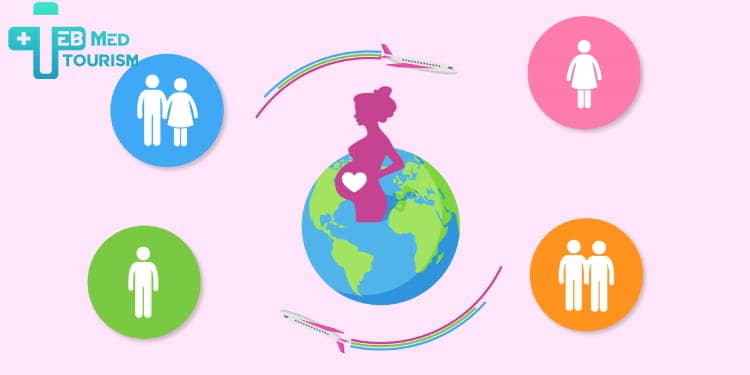
All required items are fully included in the arrangement. So, there is no problem through your journey. Intended parents from all countries would be accepted, and people from all over the world could come to Iran for surrogacy. There are no restrictions. It should be noted that according to the laws of Iran, only married couples are accepted, and it is not possible to provide services to other individuals like single parents and unmarried couples.
Surrogacy arrangements in TebMedTourism
This process in Iran is not time-consuming compared to many International surrogacy arrangements destinations. Intended parents only need to stay in Iran 21 days for IVF and egg donation, and if none of these procedures are needed, they only need to stay in Iran for less than 7 days. Parents are allowed to return to Iran one week after the birth of the baby to pick up the baby.
After the baby was born in Iran, a birth certificate will be issued in the name of the biological parents, and there will be no name of the surrogate mother. Furthermore, all these actions are done in less than a week. The nationality of the baby will be the same as the birth parents.
Issuing a visa and passport for the baby depends on the parent’s country, and in case of cooperation, the child’s passport will be prepared in the shortest possible time. After that, the parents can transfer the child to their own country. Regarding the payment terms, it should be noted that 50% of the cost is received before surrogacy, and the rest must be paid after the baby’s birth.
The arrangement also states all the necessary things, including what to do if the pregnancy does not go well and if abortion is needed. The surrogacy journey is not as easy as it might be seen. It is emotionally demanding, and intended parents should have support when doing this process. Our colleagues in TebMedTourism are ready to answer all the questions of parents and guide them to make the best decision if they need any guidance.